
2026 World Day for Audiovisual Heritage
To share information about your own celebrations, please click on the ADD A NEW EVENT button below.
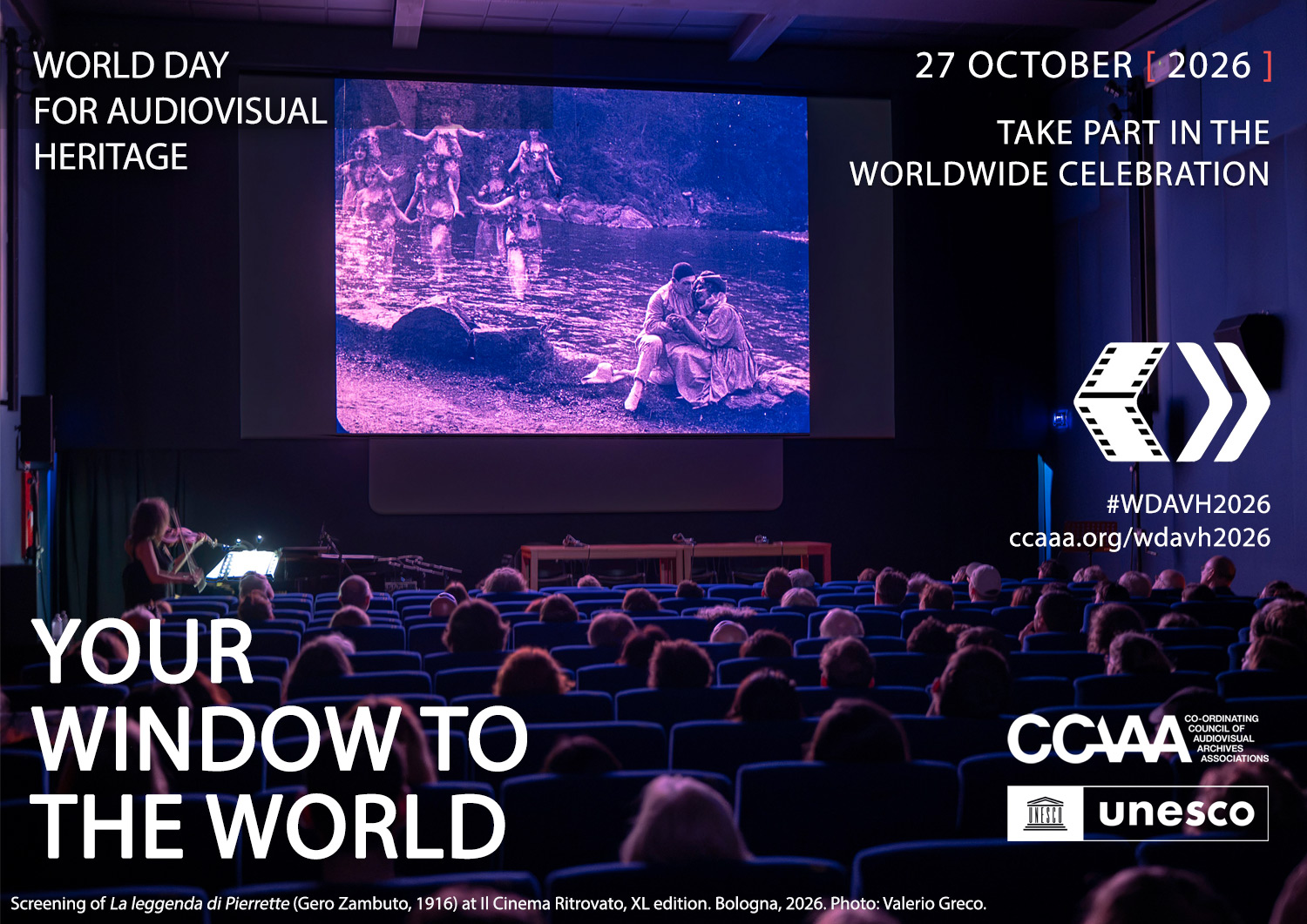
27 October is the World Day for Audiovisual Heritage (WDAVH), a key initiative by UNESCO and the Coordinating Council of Audiovisual Archives Association (CCAAA). WDAVH is a global commemoration organized by audiovisual archives to draw attention to the importance and urgency of protecting films, video, recorded sounds, and digital media to ensure their long-term availability and accessibility.
Safeguarding fragile audiovisual formats is vital to preserve human history, cultural identity, and collective memory. Audiovisual materials capture true voices, sights, and sounds of past events. They embody unique community traditions, oral histories, languages, and artistic expressions. Indigenous languages, local music, and community stories live inside these unique recordings.
You can make a difference. Use the poster and video on this dedicated webpage for reaching out to different communities. Share about the events you are organizing on and around 27 October so that individuals and organizations around the world can be motivated to join in or inspired by your creative endeavors. Be part of raising awareness of the importance of our shared audiovisual heritage.
Andrea Leigh
Chair of the CCAAA
Download, use, and share this year's poster:
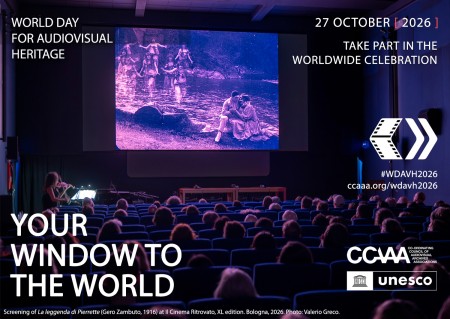
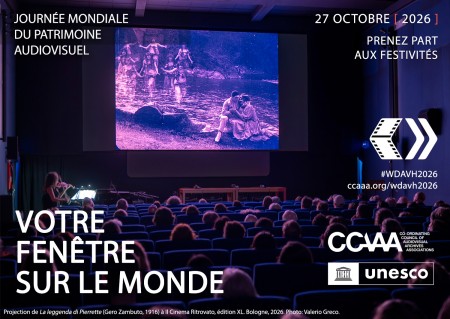
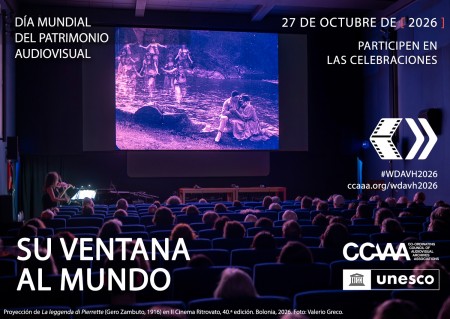
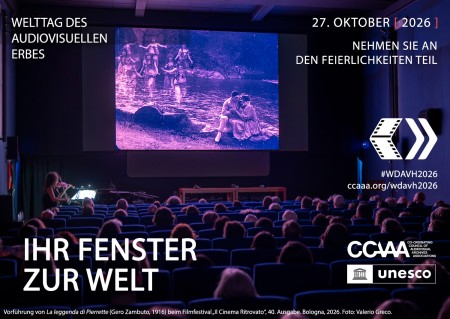
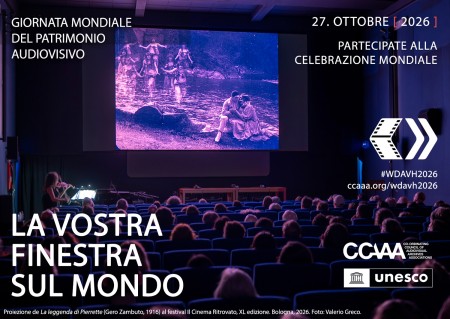
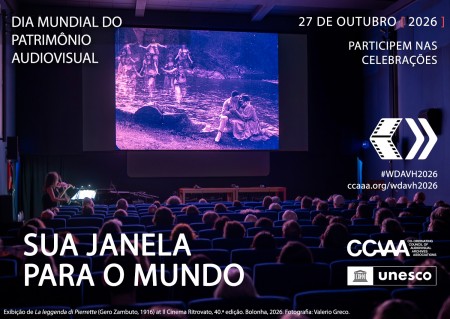
Should you require one of the 2026 World Day for Audiovisual Heritage posters in another file format, or in another language, please get in touch with us through the contact form and we will try to help you.
Download, use, and share the promotional video:
You can download and share the World Day video by going to this dedicated page on the CCAAA website.
You can now visualize all events of this year's World Day for Audiovisual Heritage on a dedicated world map that is updated in real time.

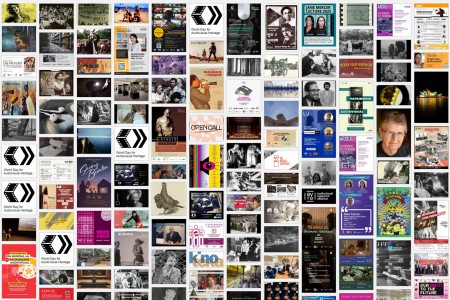
You can also visualize all the notices ever posted about events celebrating the World Day for Audiovisual Heritage on the CCAAA website since 2016, on this virtual 'mosaic wall' of events.
Share the news of your World Day celebrations:
The eight associations forming the CCAAA (AMIA, ARSC, FIAF, FIAT-IFTA, IASA, ICA, SEAPAVAA, IFLA) strongly encourage all their members (and any other institutions) not only to join in the global celebrations of the 2026 World Day on and around 27 October, but also to share the information about their particular events, by clicking on "ADD AN EVENT" below and filling in the quick-and-easy form. Your descriptive text can be in the language of your choice (or even better... in several languages), but we ask you to limit it to 500 words max. You can also attach one image per event. Please fill in and submit one form per event. Your contributions will be automatically added to the list of Word day events at the bottom of this page (the latest added event will appear at the top of the list).
Happy 2026 World Day for Audiovisual Heritage !
2026 World Day for Audiovisual Heritage
To share information about your own celebrations, please click on the ADD A NEW EVENT button below.
27 October is the World Day for Audiovisual Heritage (WDAVH), a key initiative by UNESCO and the Coordinating Council of Audiovisual Archives Association (CCAAA). WDAVH is a global commemoration organized by audiovisual archives to draw attention to the importance and urgency of protecting films, video, recorded sounds, and digital media to ensure their long-term availability and accessibility.
Safeguarding fragile audiovisual formats is vital to preserve human history, cultural identity, and collective memory. Audiovisual materials capture true voices, sights, and sounds of past events. They embody unique community traditions, oral histories, languages, and artistic expressions. Indigenous languages, local music, and community stories live inside these unique recordings.
You can make a difference. Use the poster and video on this dedicated webpage for reaching out to different communities. Share about the events you are organizing on and around 27 October so that individuals and organizations around the world can be motivated to join in or inspired by your creative endeavors. Be part of raising awareness of the importance of our shared audiovisual heritage.
Andrea Leigh
Chair of the CCAAA
Download, use, and share this year's poster:
Should you require one of the 2026 World Day for Audiovisual Heritage posters in another file format, or in another language, please get in touch with us through the contact form and we will try to help you.
Download, use, and share the promotional video:
You can download and share the World Day video by going to this dedicated page on the CCAAA website.
You can now visualize all events of this year's World Day for Audiovisual Heritage on a dedicated world map that is updated in real time.
You can also visualize all the notices ever posted about events celebrating the World Day for Audiovisual Heritage on the CCAAA website since 2016, on this virtual 'mosaic wall' of events.
Share the news of your World Day celebrations:
The eight associations forming the CCAAA (AMIA, ARSC, FIAF, FIAT-IFTA, IASA, ICA, SEAPAVAA, IFLA) strongly encourage all their members (and any other institutions) not only to join in the global celebrations of the 2026 World Day on and around 27 October, but also to share the information about their particular events, by clicking on "ADD AN EVENT" below and filling in the quick-and-easy form. Your descriptive text can be in the language of your choice (or even better... in several languages), but we ask you to limit it to 500 words max. You can also attach one image per event. Please fill in and submit one form per event. Your contributions will be automatically added to the list of Word day events at the bottom of this page (the latest added event will appear at the top of the list).
Happy 2026 World Day for Audiovisual Heritage !
Click HERE to open a new window with a printable version of the list below.

En el marco del Día Mundial del Patrimonio Audiovisual, se llevó a cabo una nueva sesión de Un día con…, con la capacitación: Metadatos asociados a los archivos de radio y televisión.
Durante la actividad, se abordó la importancia de los metadatos como información descriptiva de los archivos de audio, video e imagen que generan los medios de comunicación, así como su papel para facilitar el acceso, la consulta y la preservación del patrimonio audiovisual y documental.
Esta sesión forma parte del programa de capacitación dirigido a las y los becarios del Laboratorio Multimedia y estuvo a cargo del equipo del Centro de Documentación Audiovisual de Radio y Televisión UASLP, con la participación de Ubaldo Candía Reyna.

The SABC Radio Archives in cooperation with the SABC Television News Archives and the SABC Television Programme Archives did an activation on Tuesday 27 October in the foyer of the national broadcaster, the South African Broadcasting Corporation. 3 Videos were looping on the screen, one of the SABC Archives, the WDAVH official video and a 2017 video of the SABC Archives.
The archivists dressed in traditional attire, and handed out business cards. Traditional music was played and the different formats of the Archives were being displayed.
8 gift bags (from generous donations by the radio stations) were gifted to some of the supporters on the day - via random.org draws.
Photos of the day are here: Facebook Radio Archives WDAVH https://www.facebook.com/share/p/1CE9CjeUA3/
Numerous interviews were done by the SABC Radio Stations:
1. Channel Africa archivist Philasande Khumalo on Radio 2000: https://www.facebook.com/share/p/18dzG5bNAS/
2. Restoration archivist Obakeng Phiri on SAFM: https://www.facebook.com/share/p/1NKYPWC8Bq/
The radio stations also broadcasted the importance of the day: SAFM: https://www.facebook.com/share/p/1ExmSinejt/
https://www.facebook.com/share/p/19egXQNbPF/
Radio 2000: https://www.facebook.com/share/p/1BiwQkzsvh/
Retrospective interviews were also done on Motsweding Fm and Channel Africa.
The day gave the SABC Archives a platform to inform about the work we do, and made the internal staff and public aware of the Radio and TV Archives. Thank you!

Rediscovering Historical Footage: Audiovisual Heritage and Public Memory of South Korea's Democratization Movement
A Special Documentary Screening and Discussion for World Day for Audiovisual Heritage 2026
- Date: 6 November 2026, 16:00–17:50 (KST)
- Venue: Cinematheque KOFA, Korean Film Archive, Seoul, Republic of Korea
- Organizers: The Korean Association for Audiovisual Preservation, Institute of Information and Archival Science in HUFS, Korean Society of Archives, Records and Information Culture
To celebrate UNESCO's World Day for Audiovisual Heritage 2026, the organizers will host a special documentary screening and public discussion exploring the rediscovery, circulation, and reuse of historical audiovisual records related to South Korea's democratization movement.
The event features The Yearbook: Waiting for the Teacher (Joreobaelbeom: seonsaengnimeul gidaryeotda) (2026), directed by Kim Jongkwan. The documentary revisits a student protest that took place in Jeonju on 27 May 1980, during the final days of the Gwangju Uprising. Through historical footage and personal testimonies, the film reconnects former students and their teacher, revealing how rediscovered audiovisual records can contribute to new understandings of the past.
Following the screening, a public discussion will bring together the film's director, a KBS documentary producer, a film scholar specializing in video media, and an archival studies researcher. The conversation will examine how historical footage is discovered, reused, and reinterpreted, and how audiovisual records acquire new meanings as they circulate across different media and communities.
Particular attention will be given to the Gwangju Videos, which played an important role in communicating the events of May 1980 under conditions of censorship and restricted information. Their history highlights how copying, circulation, and collective screenings can be integral to the historical significance of audiovisual records, rather than merely secondary to the preservation of original materials.
By connecting documentary filmmaking, broadcasting, media studies, and archival scholarship, the event invites audiences to reconsider how audiovisual heritage is valued, preserved, and made accessible. It emphasizes that the significance of audiovisual records lies not only in what they document, but also in how they are shared, experienced, and remembered.
Audiovisual heritage is not only a record of history; it is also a medium through which historical memory is created and shared.
Contact: audiovisualheritage1027@gmail.com

November 13–15, 2026 | Free Online Event
Celebrating the Power of Film to Preserve Cultural Heritage
In recognition of UNESCO's World Day for Audiovisual Heritage, Saffron Robe invites audiences around the world to experience a special virtual preview of the award-winning documentary.
Set in Luang Prabang, Laos, a UNESCO World Heritage Site, Saffron Robe follows a Buddhist monk's remarkable mission to preserve sacred traditions and expand educational opportunities for young people.
Following a special showcase at the USC Annenberg School for Communication and Journalism, this exclusive online experience offers a closer look at the decade-long filmmaking journey and the extraordinary story at its heart.
The virtual preview will feature:
- Selected scenes from Saffron Robe
- Exclusive interview clips with filmmakers Jane Centofante, Jayne Hufschmid, and Kraig Butrum
- Behind-the-scenes insights into the film's creation and cultural significance
Join us for a celebration of storytelling, cultural preservation, and the shared humanity that connects us across generations and borders.

Embracing the recurring theme of "a window to the world," this year's celebration will offer the Ghanaian public a rare opportunity to explore a remarkable collection of audiovisual materials, some dating back over 60 years. To do this, the faculty is collaborating with Rev. Dr. Chris Hesse, renowned as Kwame Nkrumah's cinematographer, and champion of Ghana’s historical film preservation advocacy to showcase some of his preserved documentary films that captures Ghana’s socio-cultural and political lives from the 1960s. Alongside the screening of these selected full-length documentaries, the event will feature an inspiring keynote address and panel discussions with key stakeholders on preservation and improving access to Ghana’s trapped audiovisual heritage. The celebration anticipates the participation of students, academics, media and cultural professionals, archivists, and the general public.

A two-day celebration of the 65th anniversary of the UCLA Ethnomusicology Archive. The event featured a symposium, musical workshops, and concerts. International, national, and local archivists, alumni, faculty, and community members came together to explore the history and evolving role of ethnomusicological archives in preserving and sustaining musical traditions. The event was also in celebration of World Day for Audiovisual Heritage. The symposium, workshops, and concerts were recorded and will be made available online, open access, on the UCLA Ethnomusicology Archive channel on the Internet Archive.
https://archive.org/details/uclaethnomusicologyarchive
AsAECA coorganiza junto con ENERC-INCAA y Cine Gaumont una función especial de Para hacer una película solo hace falta un arma (Santiago Sein, 2026), en el Cine Gaumont.
Antes de la proyección convesarán Eugenia Monti, jefa de producción de la película; Yanina Saccani, integrante de ASAECA y del Cine Gaumont; Mariana Avramo y María Jazmín Adrover, de la Cinemateca del INCAA; Ana Broitman, presidenta de AsAECA; y Laura Gómez Gauna, Eva Noriega y Alejandra Ruiz, de la Comisión de Archivos y Patrimonio Audiovisual de AsAECA.
Cada 27 de octubre se celebra el Día Mundial del Patrimonio Audiovisual, impulsada por la UNESCO y el CCAAA. Esta fecha invita a reflexionar sobre la importancia de preservar el patrimonio audiovisual y su papel en la memoria colectiva y la identidad cultural.
???? Lunes 26 de octubre | 18:30 Hs
???? Cine Gaumont (Av. Rivadavia 1635, CABA)

Every year on 27 October, we commemorate World Day for Audiovisual Heritage to advocate for the continued preservation, accessibility, and safeguarding of our audiovisual archives.
These footages capture Singapore some 90 years ago—from bustling trade and traffic to scenic spots for recreation. We can revisit these scenes today thanks to the donor, the filmmaker’s grandson, who recognised that the film needed repair and sent it for restoration. Colour segments were rebalanced and the footage upscaled to HD, keeping this record of 1930s Singapore accessible.
Revisit the past through more Home Movies on ArchivesOnline: https://www.nas.gov.sg/archivesonline/
(Social media post on the National Archives of Singapore's Instagram page, curated by the Audiovisual Archives department.)

El Centro de Documentación Audiovisual de Radio y Televisión de la Universidad Autónoma de San Luis Potosí, se suma a las conmemoraciones del Día Mundial del Patrimonio Audiovisual con una serie radiofónica titulada: Memorias en espiral; esta serie de 12 capítulos rescata los sonidos del pasado a través de los discos de vinilo y los convierte en un puente hacia la presentación de acontecimientos, personajes y expresiones culturales que forman parte del patrimonio documental.
#Estreno
-Todos los miércoles, a partir del 21 de octubre
- 12:00 horas
- 88.5 FM y 1190 AM SLP / 91.9 FM Matehuala
- https://radioytelevision.uaslp.mx/
Producción general: Gabriela Hernández Nieto, Ubaldo Candia Reyna
Conducción y edición: Ana Hermosillo
Grabación: José Juan Zapata
Digitalización de contenidos: Marco Antonio González
Identidad sonora: Carlos Buendía
Voz en off: Miguel Ángel López
Diseño y publicidad: José Refugio Velázquez, Cynthia Elizabeth Medina, Emilio Eguía
Coordinación de contenido: Alejandra Monsiváis
Continuidad: Eduardo Carrillo
Difusión en plataformas: Erika Aguilar, Alejandro López
Difusión en radio: Anabel Zavala, José Manuel Castillo, Ángel Daniel Portilla

???? Happy World Day for Audiovisual Heritage! ????
Today, under the global theme “Your Window to the World,” archives around the globe celebrate the vital importance of preserving moving images and sound recordings that capture our shared human history.
At the IRMCT’s Archives and Records Section, we preserve thousands of hours of courtroom proceedings, witness testimonies, exhibits and other recordings from the International Criminal Tribunal for the former Yugoslavia (ICTY), the International Criminal Tribunal for Rwanda (ICTR) and the International Residual Mechanism for Criminal Tribunals (IRMCT). These recordings are not only historical records, they are living tools for justice, education, and truth.
To mark this occasion, we invite you to join us for a special live online event!
???? Register here to receive your MS Teams event link: https://forms.cloud.microsoft/e/9e9HD0bRHw
???? Date: Tuesday, 03 November 2026
⏰ Time: 16:00 CET
???? Platform: MS Teams (Online)
⏳ Duration: 60 minutes
What we will cover:
???? An overview of the ICTY, ICTR, and IRMCT archival collections with focus a on audiovisual collections
???? Our active preservation and access initiatives
???? Introduction to Unified Court Records (UCR) database and Archival Catalogue
???? Live Q&A
Whether you are a researcher, legal professional, historian, student, media producer or simply interested in international criminal justice and archival heritage, we look forward to welcoming you.

On the occasion of World Audiovisual Heritage Day, we are bringing together voices from the Cinémathèque québécoise and Concordia University to explore the challenges of preserving and accessing film and video collections. This year, we will explore stories of collaboration that lead to the preservation and access of audiovisual heritage.
The event is a series of short presentations by specialists from both institutions. To broaden the conversation, the main program will be followed by a series of lightning talks, followed by a public discussion.
Watch the recording: YouTube
Speakers
Hélène Brousseau
Digital Media and Visual Resources Librarian, Concordia Library. In her presentation, Brousseau will introduce the new Guidelines for Audiovisual Resources in Libraries and Other Institutions, which were updated and approved in 2026 by the International Federation of Library Associations and Institutions (IFLA).
Élisabeth Meunier
Directrice de la préservation et du développement des collections, Cinémathèque québécoise. In her presentation: La coopération internationale : une solution pour assurer la sauvegarde du patrimoine audiovisuel (presentation in French), Meunier will report on an international cooperation project aimed at preserving and showcasing the original footage shot by filmmakers Danièle Lacourse and Yvan Patry and their team in Eritrea, Ethiopia, and Rwanda between 1985 and 1996.
Alexandre Pagé
Archival Film Projectionist (16mm <-> IMAX 15/70mm), Concordia University. In To Screen or Not to Screen, Pagé will explore the siamese relationship of screening and preserving archival celluloid prints; the steps (and missteps) taken from inspection to projection. Using recent examples, Pagé highlights the solidarity and intricate collaborative efforts within the film archives community in Montreal.
Tatiana Povoroznyuk
Video Archive Coordinator, Community University Television - Concordia (CUTV). Since 1969, CUTV has documented arts, activism, and student life in Tiohtià:ke / Montreal. The resulting video archive consists of 1000 magnetic tapes holding newscasts, coverage of local music, student films, and more. Povoroznyuk’s presentation CUTV Archives: Community of Stewards will tell the story of this collection, describing past and present collaborations behind the current project of digitizing and providing access to the video tapes.
Lightning Talks:
Tyisha Murphy
Doctoral candidate at Concordia University, will introduce the David Webb collection.
Louis Pelletier
Laboratoire CinéMédias, Université de Montréal. Pelletier will explore Elsie Reford's lenticular films.

The Audiovisual Preservation and Digitization unit within the Ohio State University Libraries hosted an all-day workshop to explore direct cinema through hand-painting and etching 16mm film. The films were then scanned on our Lasergraphics Archivist. These are the results. https://www.youtube.com/watch?v=I1rNaEuKcFA

To celebrate the UNESCO World Day for Audiovisual Heritage 2026, Eye Filmmuseum is releasing Peter Delpeut’s feature film Felice... Felice... (1997) which has been digitally restored by Eye. The film opened the International Film Festival Rotterdam in 1998 and won two Golden Calves, for Best Actor (Johan Leysen) and for Best Dutch Film in the same year.
Inspired by hand-coloured nineteenth-century photographs by, among others, Felice Beato, Shimooka Renjō and Baron von Stillfried, the film follows a fictionalized version of Felice Beato as he returns to Japan in search of his beloved O-Kiku. It is an ode to love and to film history (the Japanese directors Mikio Naruse and Yasujirō Ozu). It is also a contemporary japonaiserie, a style of art and architecture inspired by Japanese art and culture. Shot entirely in a studio in Amsterdam, the film recreates Felice’s journey through the archival photographs, while contrasting their colonialist gaze with the clash of the Western and Japanese cultures through the main characters inability to understand O-Kiku and his distorted memory of their relationship.
Director Peter Delpeut, former artistic director of Nederlands Filmmuseum, received much praise for his found-footage films Lyrical Nitrate (1990), The Forbidden Quest (1993), and Diva Dolorosa (1999), all available on Eye Film Player. In an interview with Filmkrant, he spoke about his fascination with the 19th century: “Many things we now take for granted were born then: the fascination with travel, curiosity about other cultures, and the invention of photography and film. The world still had to be discovered, and that is what makes this century such an interesting period for letting my imagination run free.”
Like the other Peter Delpeut films on the Eye Film Player, Felice... Felice... is available worldwide and for free, with optional English subtitles.

Revisiting the Classics: Voices and Memories of the NTNU Department of Music is an online exhibition presented in celebration of the 2026 World Day for Audiovisual Heritage, under the theme “Your Window to the World.”
Founded in 1946, the Department of Music at National Taiwan Normal University (NTNU) has played a significant role in the development of professional music education in postwar Taiwan. Over the past eight decades, its faculty and students have contributed to Taiwan’s musical life through teaching, performance, composition, and research, leaving behind a rich collection of sound recordings, photographs, concert programs, and historical documents.
Drawing primarily on archival materials preserved by the NTNU Digital Archive Center for Music (DACM) and research published in the 2016 volume NTNU and Taiwanese Music (《師大與臺灣音樂》), the exhibition begins with 19 historical vocal recordings featuring ten former faculty members of the Department of Music. These recordings offer opportunities to revisit the voices and musical artistry of earlier generations of singers and educators.
The exhibition also presents historical photographs and documents that illuminate the department’s early development, its involvement in Taiwan’s contemporary music movements and folk music collection, and its connections with professional performing ensembles. Together, these materials offer glimpses into the people, musical practices, and changing cultural environments that have shaped Taiwan’s musical history.
Through the preservation, digitization, and presentation of historical audiovisual materials, the exhibition invites audiences to listen to voices from the past, rediscover musical memories, and reflect on how audiovisual heritage connects generations and opens new windows onto our shared cultural histories.

Lost and Found: 70th Anniversary of “Taiyupian” (Taiwanese-Language Cinema) | 2026 TFAI Research Symposium
➤ Date: October 23-24 (Friday-Saturday), 2026 | Location: Cinema A, Taiwan Film and Audiovisual Institute
Each year to celebrate World Day for Audiovisual Heritage, the Taiwan Film and Audiovisual Institute (TFAI) hosts a research symposium to present its annual findings. As the year 2026 marks the 70th anniversary of Taiwanese-language cinema, TFAI is dedicated to repositioning its place in world cinema history through long-term efforts in collecting, organizing, and restoring these precious films. Under the theme "Lost and Found," this year's symposium focuses on examining surviving Taiwanese-language film fragments and related historical research to reconstruct new meanings from these remnants. In addition to presenting in-house research on "Reconstructing Lost Taiyupian," international scholars have been invited to deepen the dialogue between Taiwan and the world, enriching the contemporary exploration of Taiwanese-language films.
Celebratory Outdoor Events Commemorating World Day for Audiovisual Heritage and 70th Anniversary of “Taiyupian”
➤ Date: October 31 (Saturday), 2026 | Time: 13:30–21:00 | Location: Qixing Park
To celebrate the 70th anniversary of Taiwanese-language cinema, TFAI is expanding this year’s celebratory event. On the evening of Saturday, October 31, an outdoor screening of this year's restored masterpiece, 'Love Never Ceases' (1962), will take place in Beitou District—famously known as “Taiwan’s Hollywood.”
Directed by SHAO Lo-hui, 'Love Never Ceases' tells the story of music instructor ANG It-hong, who arrives in southern Taiwan to teach and falls in love with a local woman named Guat-ha. After being forcefully separated by Guat-ha’s adoptive father, ANG’s family eventually reunites and reconciles years later at a live concert performance. The film's location shooting spanned the forests of Alishan, Old Town Taipei, Chunghua Market, and Beitou Park. In light of this, TFAI purposefully chose Qixing Park next to Xinbeitou MRT Station as the venue for the Asian premiere of the digitally restored 'Love Never Ceases.' This decision pays homage to the platform scene in the film's farewell sequence, while underscoring the theme of “Formosa Treasure: Taiyupian as World Cinema."
'Love Never Ceases' is a pioneer of Taiwanese musical films, featuring numerous popular hits of the period. The screenplay was adapted from the iconic 1959 Taiwanese song of the same name by "King of Formosan Song," HUNG I-feng, who was also invited to star in the film. Now, TFAI has completed the digital restoration of 'Love Never Ceases' and invited HUNG I-feng's son, Golden Melody Award-winning singer HUNG Jung-hung, to perform live at the screening event. Prior to the screening, HUNG will also share behind-the-scenes stories of his father's film debut with the audience.
In addition to the Asian premiere of the newly restored 'Love Never Ceases' on the evening of Saturday, October 31, a series of "Taiwanese Film Set Experiences" will take place at Qixing Park starting in the afternoon. Visitors of all ages can participate in traditional Taiwanese games for a chance to win movie posters, vinyl records, vintage items, and other prizes. The site will also feature traditional Taiwanese street food stands and a free retro-style Polaroid photo booth.

In the legend of Xue Ping-gui and Wang Bao-chuan (薛平貴與王寶釧), Wang Bao-chuan waited 18 years in a cold cave-dwelling for her husband’s return. It took a team at Tainan National University of the Arts (TNNUA) a decade of independent effort to digitally restore all three episodes of the Hakka-language version of this landmark Taiwanese film, bringing a long-lost classic back to the screen.
In January 1956, director He Ji-ming (何基明, 1916–1994) released Xue Ping-gui and Wang Bao-chuan, filmed on 35mm film. Its premiere in Taipei caused a sensation and helped usher in the golden age of Taiwanese-language cinema. As the popularity of Taiwanese-language films waned in subsequent decades, this once-celebrated work became one of more than a thousand films that were lost or remain unaccounted for.
In 2013, a TNNUA team discovered three episodes of the Hakka-language version of Xue Ping-gui and Wang Bao-chuan in Miaoli, Taiwan. The discovery launched a rescue and restoration effort. Without financial support from government agencies, the team independently undertook the digital restoration of the first two episodes, which were subsequently screened at venues across Taiwan and overseas.
Today, TNNUA announces the completion of the digital restoration of the third and final episode. Join us as this classic returns to a historic cinema, Chuan Mei Theater (全美戲院), and experience the long-awaited conclusion of a cinematic story first brought to the screen 70 years ago.

La Cinemateca de Bogotá - Gerencia de Artes Audiovisuales del Idartes, y la Fundación Patrimonio Fílmico Colombiano (FPFC) organizan el Mes del Patrimonio Audiovisual. Este recoge dos conmemoraciones internacionales, el Día del Cine Casero (Home Movie Day) y el Día Mundial del Patrimonio Audiovisual, y las despliega en un conjunto de actividades que vincula el archivo doméstico, la reflexión crítica, el trabajo técnico de preservación y la exhibición de obras restauradas.
El mes adquiere este año un significado particular. La Fundación Patrimonio Fílmico Colombiano cumple 40 años dedicados a la preservación, conservación y difusión del patrimonio audiovisual nacional, y la Cinemateca de Bogotá cumple 55 años como centro cultural orientado a promover las políticas públicas del audiovisual, preservar el patrimonio audiovisual de la ciudad y reflexionar sobre el cine nacional. A ello se añaden dos efemérides técnicas que estructuran una de las líneas del programa: los 70 años del video (1956) y los 50 años del VHS (1976). Cuatro aniversarios unidos por la permanencia de las imágenes y por el trabajo sostenido que la hace posible.
Esa permanencia también es obra de las personas que la sostuvieron. Por esta razón, la programación dedica un homenaje a Augusto Bernal Jiménez (q. e. p. d.), crítico, académico y cineclubista, director de la Cinemateca Distrital (hoy Cinemateca de Bogotá) y fundador de la Escuela de Cine Black María. Su labor crítica y formativa también fue preservación: la del pensamiento sobre las obras.
Programa
• 17 de octubre — Home Movie Day 2026: muestra de películas familiares recuperadas por la ciudadanía en el marco de la Invitación Cultural para la Digitalización de Cine en Formato 35mm y 16mm.
• 20 de octubre al 16 de noviembre — Exposición del homenaje a Augusto Bernal en Calle Museo, con materiales de su archivo personal, y fanzine colectivo a partir de sus textos en la Biblioteca Especializada en Cine y Medios Audiovisuales BECMA.
• 21 al 28 de octubre — Cuatro clásicos colombianos de 1986 restaurados por la FPFC: La boda del acordeonista (Luis Fernando Bottía), A la salida nos vemos (Carlos Palau), Pisingaña (Leopoldo Pinzón) y La mansión de Araucaima (Carlos Mayolo).
• 27 de octubre — Jornada central: sesión técnica sobre video y VHS, encuentro-homenaje a Augusto Bernal (q.e.p.d) en la Sala Capital.
• 28 de octubre — Alma provinciana (Félix Joaquín Rodríguez, 1926), versión restaurada de unaobra central del cine silente colombiano.
---
Audiovisual Heritage Month at Cinemateca de Bogotá links Home Movie Day and World Day for Audiovisual Heritage, and marks four anniversaries: 40 years of the Fundación Patrimonio Fílmico Colombiano, 55 years of the Cinemateca, 70 years of video and 50 years of VHS. Highlights: Home Movie Day (17 Oct); a tribute to critic, scholar and cinephile and ciné-club organizer Augusto Bernal Jiménez, with an exhibition (20 Oct–16 Nov) and a gathering on 27 Oct; four restored Colombian classics from 1986 (21–28 Oct); and the centenary screening of the silent film Alma provinciana (1926) on 28 Oct.

Como ya es costumbre en el mes de octubre, la Biblioteca Nacional de España celebrará un año más la Jornada Mundial del Día del Patrimonio Audiovisual.
Para esta edición se propone un recorrido a través de los orígenes y el desarrollo de la industria musical en España, tomando como punto de partida la aparición de los primeros estudios y espacios destinados a la grabación sonora. El objetivo es analizar cómo la posibilidad de registrar, reproducir y comercializar el sonido transformó progresivamente la música en una verdadera industria cultural y, a través de la mirada de investigadores y profesionales que han trabajado en el sector, explorar la historia de la industria musical española, tan desconocida. Para ello se abordarán la creación de los primeros estudios, empresas y profesionales que participaron en el desarrollo de la industria discográfica y la transformación de los soportes y sistemas de grabación, desde los discos de vinilo y la cinta magnética, pasando por el casete, hasta el CD y la era de la digitalización que vivimos en la actualidad.
La jornada servirá como espacio de reflexión sobre la historia de la industria musical en España, el patrimonio sonoro y audiovisual y la consiguiente importancia de conservar las grabaciones que documentan esta evolución, así como de aquellos estudios de grabación españoles que llevaron a cabo esta labor de registro.
En este contexto, las colecciones de las instituciones patrimoniales, como es el caso de la Biblioteca Nacional de España, constituyen una fuente fundamental para reconstruir la historia no solo de la música grabada, sino también de las empresas, artistas, intérpretes y productores que hicieron posible su desarrollo.
Participan
Mercedes Lomas, actual presidenta de la sección española de la Audio Engineering Society (AES)
Eusebio Rey Marcos, director del grupo Iberofón S. A.
Raúl Ros Encinar, ingeniero de sonido en EMI y creador del estudio de grabación El Estudio Sonido Digital S. L.
David Bonilla, A&R y catálogo en Warner Music Spain
José María Díez Monzón, autor del libro Hispavox. El sonido de una época e ingeniero de sonido en RTVE
Modera
María Jesús López Lorenzo, jefa del Servicio de Documentos Sonoros y Audiovisuales de la BNE

A Heritage Carried into the Future: “How the Ship of Amentü Set Sail” Joins the İstanbul Museum of Painting and Sculpture Collection!
Directed by Tonguç Yaşar and based on a screenplay by Sezer Tansuğ, the 1969 animated film How the Ship of Amentü Set Sail (Amentü Gemisi Nasıl Yürüdü) brings traditional calligraphy into dialogue with the expressive possibilities of animation. Restored by Mimar Sinan Fine Arts University’s Prof. Sami Şekeroğlu Cinema-TV Application and Research Center, this pioneering work of Turkish animation cinema has been brought back to life and made accessible to contemporary audiences. The film is now being presented in the Calligraphic Trends Gallery at the İstanbul Museum of Painting and Sculpture.
Marking UNESCO World Day for Audiovisual Heritage on 27 October , a special ceremony will be held at the Halil Dikmen Hall of the İstanbul Museum of Painting and Sculpture, hosted by the Rectorate of Mimar Sinan Fine Arts University.
The ceremony will feature addresses by Prof. Ahmet Sacit Açıkgözoğlu, Rector of Mimar Sinan Fine Arts University; Assist. Prof. Başak Ürkmez, Director of the Center; Prof. Dr. Deniz Bayrakdar, Chair of the Communication Specialization Committee of the Turkish National Commission for UNESCO; Gamze Şernaz, Vice Chair of the TOBB Council for Creative Industries; and Assoc. Prof. İlona Baytar, Director of the İstanbul Museum of Painting and Sculpture.
Film preservation and restoration specialists Dr. Şenol Er and Lecturer Deniz Özgünay will discuss the film’s restoration process, while Assist. Prof. Ali Rıza Özcan will examine the work in terms of its calligraphic characteristics.
Following the speeches and a screening of the restored film, attendees will proceed to the Calligraphic Trends Gallery, where the film will be presented.
We warmly invite all art lovers to join us in witnessing the preservation of our cultural memory and its transmission to future generations.
Tuesday, 27 October 2026
3:00 PM
İstanbul Museum of Painting and Sculpture – Halil Dikmen Hall
#MSGSÜ #UNESCO #TOBBCreativeIndustriesCouncil #İstanbulMuseumofPaintingandSculpture #WorldDayforAudiovisualHeritage #TonguçYaşar #HowTheShipOfAmentüSetSail #SezerTansuğ #FilmRestoration #CulturalHeritage #Calligraphy #TurkishCinema #MSGSUCinemaTVCenter #TurkishFilmArchive
@unescoturkiye @msgsusinematvmerkezi @trkreatifendustrilermeclisi

The Media Preservation Unit at Michigan State University Library is featuring books and audiovisual materials focused on media and nostalgia, media preservation, films with media as the theme/plot point, materials focused on the importance and impact of physical media, and books centered on the use of "mixtape" to indicate that something is handmade or made up of multiple voices and perspectives, to celebrate World Day for Audiovisual Heritage 2026. These materials are available for browsing in the Library's main lobby through October 30, and may be checked out any time.

To celebrate the UNESCO World Day for Audiovisual Heritage 2026, Eye Filmmuseum is releasing a new Desmet compilation with recorded music by Stephen Horne. This compilation features When the Earth Trembled (US ,1913) directed by Barry O’Neil, starring Ethel Clayton. This fiction melodrama is based on the great San Francisco earthquake of 1906, incorporating what is believed to be genuine archival footage from 1906.
In 2015, Eye Filmmuseum and San Francisco Silent Film Festival completed the digital restoration, combining three incomplete versions from the collections of MoMA, the British Film Institute (BFI) and Eye into the most complete version of the film to date.
Jean Desmet distributed When the Earth Trembled in the Netherlands from February 1914 until well into 1916, with great success. He supplied cinemas with complete programmes of five to eight films, totaling at least two hours: a newsreel, a short comedy, a travelogue or scientific film, the main feature and, finally, a couple of short comedies. This programme, curated by Eye's silent film curator Elif Rongen-Kaynakçi, is a loose reconstruction of such a screening. The total length is 76 minutes, and the short films are: a Pathé newsreel, Constantine (FR,1913), The High Born Child and the Beggar (US, 1913), L’Apiculture (Beekeeping, FR, 1913) and to conclude Le désespoir de Pétronille (Pétronille’s Despair, FR, 1914) starring Sarah Duhamel.
Like the other Desmet compilations on the Eye Film Player, this program is also available worldwide and for free, with English subtitles and recorded score.

Día Mundial del Patrimonio Audiovisual en la Cinemateca Dominicana
En la Cinemateca Dominicana estamos comprometidos con la preservación del patrimonio audiovisual, así como con su acceso para el público. Por esta razón, con motivo del Día Mundial del Patrimonio Audiovisual, el 27 de octubre, presentamos una programación con varias actividades:
Exposición Oscar Torres: Una mirada universal desde el Caribe
Un recorrido por la obra fotográfica de Oscar Torres, cuya mirada trasciende fronteras desde el Caribe.
Visita guiada, proyección y conversatorio
Un recorrido por nuestras instalaciones y la bóveda, donde se resguarda parte de la memoria audiovisual del país. Continuaremos con la proyección de Machete Gillette Mamá, de Larry Gottheim, y cerraremos con un conversatorio.
Proyección de El hijo y 4 hombres y un ataúd
Presentaremos la versión restaurada del cortometraje El hijo, de Agliberto Meléndez, seguida de la proyección de 4 hombres y un ataúd, de Pericles Mejía.
???? Cinemateca Dominicana
???? 27 de octubre de 2026 / 6:00 PM
Entrada Libre
On Tuesday, at 7.00 pm, there will be a launch for the book The End of the Affair by teacher and film critic Andrei Gorzo, alongside a screening of Our Man in Havana (dir. Carol Reed, 1959) as part of the ‘Cinema Factor: Adaptations of Graham Greene’ programme and in honor of the UNESCO World Day For Audiovisual Heritage. In what is the third (and final) collaboration between Greene and Reed, Alec Guinness plays the role of Jim Wormold, an English expatriate who sells vacuum cleaners in Havana.
"Greene must have had a marvellous time imagining poor Wormold, the vacuum cleaner salesman who was recruited into the secret service and, having nothing to spy on, makes things up. The film […] is a satire on the secret services (and the thrilling tales they have consistently inspired), a farcical yet somehow serious thriller, whose premise continues to fascinate – see John Le Carré’s novel Our Man in Panama and John Boorman’s film adaptation" – Andrei Gorzo – 2001

The Bangladesh Film Archive observed World Day for Audiovisual Heritage 2026 by organizing a workshop titled “Preserving Audiovisual Heritage in the Digital Age” on 17 October 2026 at its seminar hall.
The workshop was graced by Mr. K. M. Abdul Wadud, Additional Secretary, Ministry of Information and Broadcasting, as the Chief Guest and chaired by Mr. M. Javed Iqbal, Director General of the Bangladesh Film Archive.
Representatives from key national institutions, including the Press Information Department, Bangladesh Television, Bangladesh Betar, the Department of Films and Publications, the Bangladesh Film and Television Institute, and the Bangladesh Film Certification Board, participated alongside officials of the Bangladesh Film Archive.
The workshop underscored the importance of safeguarding audiovisual heritage through sustainable preservation practices and digital technologies, highlighting the need for institutional collaboration to ensure that valuable audiovisual records remain accessible to future generations.

The World Day for Audiovisual Heritage provides an occasion not only to draw attention to the vulnerability and fragility of sound and image media, but also to focus on issues of access and institutional responsibility. We are therefore pleased to collaborate with radio artist and researcher Kate Donovan, who will set up a 24-hour live stream from the storage space at the Phonogrammarchiv’s new premises at Kegelgasse 27 in Vienna. The stream will feature the ambient sounds of the archive, the technical infrastructure that controls the room’s humidity and temperature, and other everyday aspects of archival work — making the archive’s walls permeable, allowing sounds to disperse and listeners to enter.
Further information, as well as an interview with the artist, will be available on the Phonogrammarchiv’s website.
Portal is part of a postdoctoral project supported by 4A_Lab in Berlin (Kunsthistorisches Institut in Florenz - Max-Planck-Institut | Stiftung Preußischer Kulturbesitz).
Streaming on October 27, starting from 12 PM: http://locus.creacast.com:9001/archive_portal.mp3
Image of the Phonogrammarchiv storage space © Bernhard Graf/OeAW

As part of the 2026 World Day for Audiovisual Heritage, the Institute for Library and Information Research (IIBI) of the National Autonomous University of Mexico (UNAM) invites you to the online conference "The Permanence of Moving Images: Reflections on Digital Film Preservation."
This event will explore the technological, cultural, and documentary challenges of preserving digital cinema, highlighting the importance of ensuring long-term access to and preservation of moving images as an essential part of our collective memory and audiovisual heritage.
Date: October 27, 2026, at 12:00 p.m. (Mexico City time).
Speaker: Gabriela Lobatón Cruz, MA (Faculty of Philosophy and Literature, UNAM).
Moderator: Sandra Lázaro Pérez, MA (IIBI-UNAM).
Format: Online.
Registration: https://forms.gle/Kege4brH8vmL7Mv59
----
En el marco del Día Mundial del Patrimonio Audiovisual 2026, el Instituto de Investigaciones Bibliotecológicas y de la Información (IIBI) de la Universidad Nacional Autónoma de México (UNAM) invita a la conferencia en línea "La permanencia de las imágenes en movimiento: reflexiones sobre la preservación del cine digital".

The exhibition is dedicated to experiences before the Cinema

“Original and truly impressive!”, “The most educational toy, with a surprising effect and a great success” and “Silent operation combined with excellent reproduction of moving images”: these are just some of the slogans that appeared in the advertising catalogues for lithographic films designed for toy magic lantern projectors for home or family use.
On the occasion of the 2026 World Day for Audiovisual Heritage, the Museo Nazionale del Cinema – Turin (Italy) presents a small selection of digitally restored lithographic films, part of a collaborative project between the Museum’s collections of Archaeology of Cinema and Film Archive and the Film Restoration Laboratory.
The “litho-films” represent the earliest example of animated cinema. Produced in Nuremberg from the late 19th century (c. 1897/1898) until the first half of the 1930s (c. 1932), the companies Bing, Plank and Carette were among the leading manufacturers of these distinctive films.
Lithographic films were produced as film loops of varying lengths and featured a wide variety of subjects and settings. They were intended for sale alongside small, hand-cranked tin toy projectors which combined the film-feeding mechanism of a cinema with the viewing method of the Magic Lantern.
Although they were made on 35 mm film and required a projector to be shown, lithographic films were not regarded as examples of cinema, but as optical toys (Optische Spielwaren in German) that could also be used for educational purposes.
In March 2026, Museo Nazionale del Cinema began a project to research, identify and catalogue the five funds of lithographic films in his collections. This resulted in the identification and cataloguing of more than 120 items. Through this initiative, Museo Nazionale del Cinema aims to offer a preview of a project that is still in its early stages, encouraging collaboration between specialists and archives and raising public awareness of the importance of preserving this technical and cultural cinematic heritage.

Dengcar Theater, 6/F MOWELFUND Center
66 Ilang-Ilang St., Immaculate Conception, QC
The MOWELFUND Film Institute and the MOWELFUND Research Library and Audiovisual Archives, in collaboration with Filipinx American artist and community archivist Ashley Dequilla, commemorate the World Day for Audiovisual Heritage 2026 with Balikbayan: Orphan and Lost Films from Chicago to Manila.
For the Filipino diaspora, film has contributed to (re)constructing the collective memory and identity of their communities. As home movies filmed by early Filipino migrants in the US recently resurface, they make present for us the everyday and the mundane in the flourishing Filipino American communities against the silences produced by the colonial archives. At the same time, absences or gaps become generative when a Filipino movie shot entirely in the US presumably gets lost, inviting critical speculation on the historical, social, and cultural contingencies of its content and production. These orphan and lost films in the diaspora bring out the complexity of audiovisual (AV) heritage and memory in the face of what is made present and absent by the archives.
In this program, Ashley Dequilla presents her work on archiving Filipino AV materials in Chicago, Illinois. The program will show midcentury family home movies featuring Federico Urian, a Filipino migrant and pioneering community organizer, for the first time alongside Dequilla’s artistic works on early Filipino Americans using found films. The exhibition will also show archival materials from our collection on Dateline Chicago: Arrest the Nurse Killer. This Filipino-produced crime film loosely based on a notorious case of mass murder in Chicago, shot on location, and now presumably lost, was an official entry to the 1976 Filipino Film Festival (now Metro Manila Film Festival).
Bringing together these AV records of Filipinos in Chicago to the Philippines, we invite everyone to join in the conversation on archiving diasporic AV heritage and tracing memory along transnational lines.
4:00 PM - Registration
5:00 PM - Screening Conversation
Pre-registration: https://bit.ly/3WEl6d8

On the occasion of the World Day for Audiovisual Heritage, the Národní filmový archiv, Prague (NFA) presents a curated program of digitally restored interwar short films from the 1930s. The selected works reflect the avant-garde tendencies of their time in various ways. The commented screening will offer a cinematic "walk" through the intersections of photography, amateur film, advertising, and theatrical experiment.
In the spirit of understanding the avant-garde as an ongoing project, the program will explore how these cross-genre works were later interpreted and presented. The avant-garde essence of these films lies less in aesthetic criteria and more in the specific environments of their creation. The screening includes lesser-known versions and fragments of original works, opening a broader discussion on their nature and practical use.
The films, their context and their digital restoration journey will be presented by NFA curators Tereza Frodlová and Sylva Poláková.
The research and digital restoration were made possible through international cooperation, particularly with Cinémathèque16.
Curated program includes:
Aimless Walk (A. Hackenschmied, 1930, 8:05 min) – silent
The Prague Castle (A. Hackenschmied, 1931, 11:52 min)
School Assignment (E. Klos, A. Hackenschmied, 1935, Czech version 3:36 min, German version 4:08 min)
Atom of Eternity (V. Šmejkal, Č. Zahradníček, 1934, 6:04 min) – silent
Hands on Tuesday (V. Šmejkal, Č. Zahradníček, 1935, 12:04 min) – silent
A Soldier’s Story (V. Šmejkal, Č. Zahradníček, 1935, 8:08 min) – silent
May (E. F. Burian, J. Lehovec, 1935, 11:19 min) – silent
May (E. F. Burian, Č. Zahradníček, 1936/1976, 10:34 min) – silent
https://www.ji-hlava.com/filmy
Das Filminstitut Hannover zeigt um 12:30 Uhr „Die Zauberschere“ (Rolf Meyer, D 1948) aus unserem Archiv. Beschäftigte und Lehrende können an diesem Tag ihre Mittagspause in den alten Kinosesseln des Filminstituts verbringen. Selbst mitgebrachte Speisen und Getränke sind willkommen. Thorsten Hoppe gibt eine kleine Einführung zum 11minütigen Kurzfilm. Veranstaltungsort: Raum 2E.1.13
Filminstitut Hannover will be showing „Die Zauberschere“ (Rolf Meyer, GER 1948) from our archive at 12:30 pm. Employees and teaching staff can spend their lunch break on this day in our old movie theater seats. You are welcome to bring your own food and drinks. Thorsten Hoppe will give a short introduction to the 11-minute short film. Location: Room 2E.1.13

Societies are often built top-down, governed by policies and systems according to some people’s vision of what makes a “better” society—but who gets left behind in the process?
Co-presented with the Asian Film Archive, Landmark is a programme by the Singapore International Film Festival (SGIFF) that showcases recent restorations of seven international classics from the 1970s to the 2000s, including a 25th anniversary presentation of Lagaan (2001). These rediscovered films explore the invisible tensions between institutions and the people living in these structures, through stories of those who navigate, resist and survive them.
Featuring post-screening Q&A sessions with programmers and filmmakers.

When a stack of rusty, dust-covered film cans arrived at Ngā Taonga Sound & Vision, it was a surprise to find much of the film inside was in great condition. The films were from the collection of Thomas H Whetton (1880-1959), freelance cameraman and inventor. Quality footage showing the immediate aftermath of the 1931 Hawke's Bay earthquake was a major highlight of his work.
After identifying their contents, Ngā Taonga preservationists were able to digitally scan the fragile reels of nitrate, allowing them to be watched again for the first time in decades. With the permission of his descendants, they have now been made available to watch online on our website.
Rust Restoration – He Waikura He Whakauka is an online curated collection where anyone can watch Whetton's films, and learn about how the audiovisual Archive of Aotearoa New Zealand preserved and digitised them.

Explore the work of local amateur filmmakers with the Northern Ireland Screen Digital Film Archive. A screening and discussion.
Northern Ireland Screen's Digital Film Archive contains thousands of films from Ulster and Northern Ireland, going back 120 years. Among the broadcast and professional productions, there are collections made by amatuer filmmakers who lovingly crafted stories, captured family memories and explored culture and heritage at a level broadcast media often doesn't have the time or inclination to do.
This screening of five amateur filmmakers shows work seldom seen and is presented by Brónagh McAtasney and Evan Marshall.

Durante veinte años la Cineteca Nacional ha celebrado el Día Mundial del Patrimonio Audiovisual, reafirmando su compromiso con el rescate, preservación, conservación, y difusión de la memoria cinematográfica de México.
Para esta edición se presenta una selección de fragmentos provenientes de diferentes colecciones, formatos y soportes. Aunque el eje temático es la Ciudad de México, la propuesta busca poner en primer plano las diversas miradas que resguardan los archivos audiovisuales y su capacidad para dar forma a las historias colectivas e individuales.
Queremos invitar al público que, a través de las imágenes puedan reencontrarse con los espacios que habitaron sus abuelos, padres y otros familiares; a reconocer los cambios que han experimentado y a reflexionar sobre la manera en que habitamos esos mismos lugares.
Al finalizar la proyección se llevará a cabo la charla: Donde la memoria permanece: conservar el patrimonio audiovisual.
Programa
Presentación del programa de la edición 2026,10min. Aprox.
-Locación Ciudad de México (Compilación, 2026) 7min.
-Colección Harry Wright Fragmentos (1929- 1935) 4min.
-Colección Osorno Barrona Fragmentos (1940-1970) 4 min.
-Colección Miguel Alemán Fragmentos (1946-1952) 10min.
-La azotea (Dir. Jorge Durán Chávez, 1953) 8min.
-Un Fuego Nuevo. Crónica de una comunidad. (Dir. Adolfo Garnica, 1973) 13min.
-Valle de México (Dir. Rubén Gámez, 1977) Versión restaurada 14min.
Charla: Donde la memoria permanece: conservar el patrimonio audiovisual, 40min.

To mark the World Day for Audiovisual Heritage on 27 October 2026, UNESCO Archives invite UNESCO staff to discover the Organization’s documentary and audiovisual heritage.
Guided tours of the Archives will take place during the lunch break (12:00–13:30), offering a behind-the-scenes look at the paper, photographic, film and sound collections. Participants will learn about the preservation challenges and ongoing digitization projects.
In addition, selected excerpts from recently digitized UNESCO archival films will be shown on screens at the entrance to UNESCO Headquarters, highlighting the Organization’s history and audiovisual heritage.
The event is an opportunity for UNESCO colleagues to discover the Archives’ collections and learn more about the work being done to preserve and make them accessible.

The preservation of analog film heritage today requires in-depth reflection on its sustainability. Among the main challenges is the need to develop methods and solutions capable of addressing the growing obsolescence of film media and the equipment that brings them to life.
In this context, EPPIC | National Conference 2026, taking place on October 29 and 30, aims to contribute to this debate, in line with the mission of the Portuguese Film Archive. The goal is to discuss strategies for the preservation and maintenance of operational equipment, recognizing its essential role in promoting film processes and works in educational, cultural, and historical contexts.
Given the inherently interdisciplinary nature of these challenges, the conference aims to foster dialogue between film archive professionals and academia, bringing together contributions from fields such as conservation and restoration, the history of cinema and technology, mechanical and electrical engineering, industry, and related disciplines, as well as from enthusiasts of this heritage.
Through this initiative, EPPIC and the Portuguese Cinematheque—Museum of Cinema seek to foster the sharing of knowledge and experiences, encouraging cooperation among specialists and raising awareness of the importance of preserving this technical and cultural legacy.

On October 29, to celebrate International Audiovisual Heritage Day, Cinemateca Júnior, in collaboration with the National Film Plan (PNC), is organizing a guided tour of the pre-cinema exhibition and the various sections of ANIM for teachers enrolled in the PNC. The partnership runs from October through December, featuring a monthly film program—held once a month on Thursdays—for schools at all educational levels, with films selected from the PNC catalog.

by Clarence Brown
starring Joan Crawford, Nils Asther, Robert Montgomery
United States, 1932 - 84 min
electronically subtitled in Portuguese | M/12
Banned for over ninety years due to copyright issues, LETTY LYNTON is one of more than two dozen films that brought Joan Crawford together with Adrian, the legendary head of wardrobe at MG-M, who was also largely responsible for turning the actress into a fashion icon of the 1930s (the dress with “puffed sleeves” from this film would be copied and mass-produced for sale at affordable prices on a scale never seen before). In this pre-Code Hollywood film, whose screenplay is based on the novel by Marie Belloc Lowndes (which in turn is based on a true story), Joan Crawford plays a “socialite” who abandons her lover and ends up being blackmailed by him. Presented in a new digitally restored print. First screening at the Cinemateca.

PIANO ACCOMPANIMENT BY FILIPE RAPOSO | Screening with free admission; tickets available half an hour before the screening
TÓ AND TINA
by Servais Tiago
Portugal, 1976 – 4 min
CANTIGA DA LAGARTA
by Artur Correia, Ricardo Neto
Portugal, 1980 – 3 min
ESTÓRIA DO GATO E DA LUA
by Pedro Serrazina
Portugal, 1995 – 6 min
A NOITE
by Regina Pessoa
Portugal, 1999 – 6 min
CLANDESTINO
by Abi Feijó
Portugal, 1999 – 8 min
A LENDA DE MIRAGAIA
by Raul Faria da Fonseca, António Cunhal
Portugal, 1931 – 20 min
Total screening duration: 47 min | M/12
A selection of six films traces different moments in the history of Portuguese animation and frames the screening of A LENDA DE MIRAGAIA ("THE LEGEND OF MIRAGAIA"), made in 1931 and considered the first animated film produced in Portugal using the silhouette technique. Believed to be lost for decades, the film was recently rediscovered and placed in the ANIM archives. This extraordinary discovery is accompanied by films by Servais Tiago, Artur Correia and Ricardo Neto, Pedro Serrazina, Regina Pessoa, and Abi Feijó, offering a glimpse into some of the transformations in Portuguese animation over more than six decades. The screening is also part of the “ANIM, 30 Years” program.

Open House: World Day for Audiovisual Heritage 2026
The United Nations Educational, Scientific and Cultural Organization (UNESCO) has designated October 27th of every year as the World Day for Audiovisual Heritage. This initiative aims to raise global awareness of the immense value of audiovisual heritage and to foster collective efforts in preserving these priceless moving images and recorded sounds. This year, the celebration centers on the theme “Your Window to the World.”
Since 2006, the Thai Film Archive (Public Organization) has hosted annual celebrations for this significant occasion. This year’s event features an exclusive "Open House," inviting film enthusiasts behind the scenes to explore the preservation process—a vital core mission of the Archive. Visitors will gain a comprehensive look at every step of film preservation, from initial acquisition and storage to public dissemination. The guided experience includes rare access to the Film Inspection and Care Rooms, the Film Processing Laboratory, the Data Center for Digital Film Archiving, Digital Transfer and Processing Workstations, and the Conservation Unit for Film-Related collection.

Celebrating UNESCO World Day for Audiovisual Heritage 2026, NFAJ has released a pre-opening version of its new website, “Shigeji Ogino, the Giant of Small-Gauge Film in Japan,” which is scheduled to officially launch in March 2027. The films of amateur filmmaker Shigeji Ogino (1899-1991), who continued his activities for more than 50 years, constitute one of NFAJ’s particularly distinctive collections.
Shigeji OGINO was born in Tochigi Prefecture, Japan. Having enjoyed photography as a hobby since his early twenties, he was inspired by a film by Koji TSUKAMOTO depicting a journey through the Seto Inland Sea and began making small-gauge films using 9.5mm stock. For more than fifty years, he pursued filmmaking with great enthusiasm, producing works such as Ueno Koen Haru no Ichinichi (1928). He received numerous awards in domestic and international competitions.
This is a highlight reel of works featured on the website"Shigeji OGINO, the Giant of Small-Gauge Film in Japan" [Pre-opening Website] (a joint project of the National Film Archive of Japan and the National Institute of Informatics)
0:00『Machi』(1930, 14 min.)
0:41『Kiyouna te』(1938, 19 min.)
1:29『Chie no tozan』(1931, 16 min.)
2:05『Toden 60nen no shogai』(1971, 30 min.)
2:58『Mizube no uta』(1968, 14 min.)
↓Click to view the website (in Japanese).

To mark World Day for Audiovisual Heritage and the 20th anniversary of the release of Perfume: The Story of a Murderer, Girona City Council, through the Girona Municipal Archive and the Cinema Museum, and in collaboration with Amics de la UNESCO, is organising a roundtable discussion dedicated to the filming of the movie, based on Patrick Süskind’s novel of the same name.
The event will feature Laura Merino, coordinator of the Girona Film Office; Carles Ribas, film critic and writer; and Lluís-Esteve Casellas, Head of the Documentary Management, Archives and Publications Service at Girona City Council.
The session will also include a presentation of a selection of photographs contributed by members of the public as part of a campaign launched by the Centre for Image Research and Dissemination (CRDI) to recover images of the film shoot, which took place in Girona’s Old Town in September 2005.

Discover how press photos become history through a virtual archive tour, award-winning film and expert Q&A.
Every photograph has two stories: the moment it captures and the journey it takes into history.
Join Topfoto for a special World Day for Audiovisual Heritage event exploring how press photographs move from newsroom to archive, and how archives help researchers uncover the people, events and stories behind the image.
Through a virtual tour of the Topfoto collection and a screening of The Moment of Truth, we'll examine the enduring importance of photographic archives for broadcasting, research, publishing and historical understanding.
Sign up for the full event, and please feel free to attend both sessions, or choose between the virtual tour and the film screening:
3pm GMT (11am ET, 8am PT)
Inside Topfoto: A Virtual Archive Tour
Take a behind-the-scenes look at one of the UK's leading independent historical photo archives. A trusted resource for archive researchers, publishers and documentary producers, Topfoto's collections have supported visual storytelling for generations.
Discover how the archive has evolved alongside changing technologies while remaining an essential source of authentic imagery and historical context. We'll share highlights from the collection, discuss current challenges and opportunities for archives, answer audience questions, and introduce our collaboration with WISE to develop AI-powered search tools that will help Topfoto as a small independent company make visual content more easily discoverable for future generations.
4pm GMT (12 noon ET, 9am PT)
Film Screening: The Moment of Truth
Watch David Baksh's acclaimed short documentary featuringTopfoto, following screenings at international film festivals including London, Berlin and Edinburgh.
The film explores the growing importance of photographic archives in an age of AI-generated imagery, and the role they play in preserving authenticity, provenance and trust.
Followed by a live Q&A with:
Flora Smith, Owner, Topfoto
David Baksh, Director, The Moment of Truth

On the occasion of UNESCO World Day for Audiovisual Heritage, the Ferrania Film Museum, in collaboration with the CSC - Cineteca Nazionale, presents a special event exploring the physical nature of film and its life over time: from its manufacture to its preservation, essential for counteracting its natural deterioration.
Alessandro Bechis of the Ferrania Film Museum will illustrate the main "ingredients" used for making film and the quality-control procedures at Ferrania 3M.
Valentina Rossetto, archivist at the CSC - Cineteca Nazionale, will present the main forms of film deterioration and practices adopted by film archives to preserve our film heritage over time.
The event will conclude with the screening of the documentary Lavoro a Ferrania (Work at Ferrania, 1962 version from the Ferrania Film Museum digitized and restored by Gianandrea Sasso at Kiné), offering an opportunity to return to the place where film was produced and, through the images, to observe some of the stages of its journey.
Programme
From 6 pm:
Alessandro Bechis (Ferrania Film Museum)
The "recipe" for making film and Quality Control at Ferrania 3M
Valentina Rossetto (CSC - Cineteca Nazionale)
Practices for the Conservation of Film materials
Screening of Lavoro a Ferrania (28')
1962 version, with music by Bruno Maderna and titles designed by Angelo Traversa.

Short interviews about World Day for Audiovisual Heritage 2026 and the theme: Your window to the world.
Short interviews about how do we protect our audio visual inheritance. How do we talk to the young generation about this so important issue.

We are pleased to present a restoration by the Jérôme Seydoux-Pathé Foundation: BÉHULA by Camille Legrand. Filmed in Calcutta in 1921, it was recently rediscovered. This film adaptation of a Bengali legend also offers a rare opportunity to see the Indian metropolis on screen as it was at the turn of the 1920s. This special screening will be accompanied on the piano by Gabriel Thibodeau.
Photo: Béhula by Camille Legrand, 1921 | ©Jérôme Seydoux-Pathé Foundation

Rare Norwegian classic from 1954, preceded by a lecture by film professor Maria Fosheim Lund from the University of Oslo.
The sensitive young Cecilia can no longer bear to live at home under the conditions there. She is offered the chance to move in with her somewhat older and more worldly friend, Tove.
The film’s writer and director was herself a lesbian, but she consistently rejected the notion that Cecilia’s sexual orientation was the film’s central theme, an issue that remained taboo in the 1950s. On several occasions, she maintained that the real focus was the problems within Cecilia’s home life. Nevertheless, Cecilia is one of the very first attempts in Norwegian cinema to portray homosexuality.

On the occasion of the World Day for Audiovisual Heritage 2026 Lichtspiel presents a program of recent film restorations from the past few years that did not have the the chance to appear on the big cinema screen yet. Among these treasures we screen the most recent restauration - a tourism promotional film by the Bernese film producer Paul Schmid from the 1920s: “Switzerland: The Alpine Wonderland". We haven’t yet been able to determine the exact date—perhaps you can help us?
The bar opens at 7pm, films 8pm. The program can also be seen as live-stream on our homepage.

Student filmmaking at the University of California, Los Angeles (UCLA) has a long and vibrant history. Its cinematic roots can be traced to the establishment of the film program in 1949, when the first UCLA student film was produced. The UCLA Film & Television Archive’s Student Film Collection contains approximately 1,500 cataloged student works representing generations of creative output. Dozens of these films are now viewable on the Archive’s YouTube channel, including narrative films, documentaries, animation and experimental works, with more to come. Visit our website to learn more about the origins of UCLA student filmmaking: https://cinema.ucla.edu/blog/first-years-of-ucla-student-films-1947-1965/
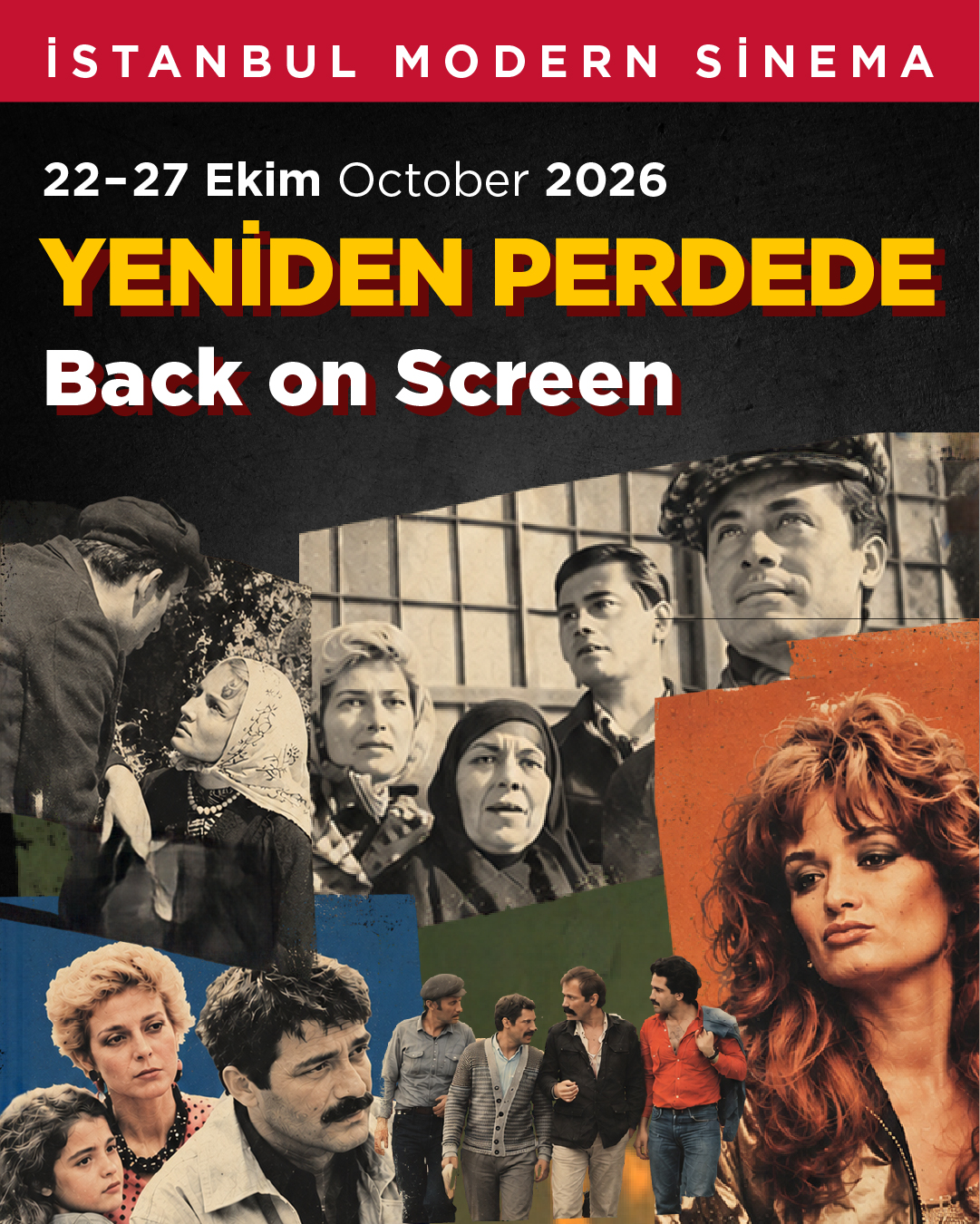
Back on Screen
22–27 October 2026
We celebrate World Audiovisual Heritage Day on 27 October by revisiting the cinematic memory of Türkiye.
Organised in collaboration with the Turkish Film Institute and Istanbul Modern Cinema, Back on Screen highlights the efforts made to preserve Türkiye’s cinematic heritage and pass it on to future generations through films restored over the past 15 years. The programme invites audiences to rediscover these films from a contemporary perspective.
Spanning from Muhsin Ertuğrul’s Bataklı Damın Kızı Aysel (1935) to Metin Erksan’s Karanlık Dünya / Âşık Veysel’in Hayatı (1953), and Erden Kıral’s Hakkâri’de Bir Mevsim (1983), the selection brings together films from different periods, shedding light on the evolution of cinema in Türkiye.
As part of the programme, a panel discussion on film restoration and cinematic heritage will also take place on 22 October 2026.
Historias que nos cuentan: literatura, cine e identidad puertorriqueña
Proyección especial: Cuentos para despertar (1998)
Dirección: Luis Molina Casanova
Martes, 27 de octubre de 2026
Lugar: Archivo General de Puerto Rico
Hora: 6:30pm
En celebración del Día Mundial del Patrimonio Audiovisual, el Archivo de Imágenes en Movimiento (AIM) del Archivo General de Puerto Rico, adscrito al Instituto de Cultura Puertorriqueña, en colaboración con Cine Nuestro, les invita a una proyección especial de Cuentos para despertar (1998), del cineasta puertorriqueño Luis Molina Casanova.
La película nos acerca a la vida del escritor Abelardo Díaz Alfaro y a los entrañables personajes de su obra literaria, cuyas historias reflejan las tradiciones, los conflictos sociales y la identidad cultural de nuestro pueblo.
Esta presentación forma parte de las actividades dedicadas a celebrar la obra y el legado cinematográfico de Luis Molina Casanova y se une a la conmemoración internacional promovida por la UNESCO.
A través de esta iniciativa, reafirmamos la importancia de conservar, preservar y difundir nuestro patrimonio audiovisual, reconociendo que las imágenes de Puerto Rico son también parte de la memoria colectiva de la humanidad.
¡Acompáñanos a celebrar nuestro cine, nuestra literatura y las historias que nos definen como pueblo!
Preservar nuestras imágenes es mantener viva nuestra memoria.
En conmemoración del Día Mundial del Patrimonio Audiovisual y como antesala a la celebración de los 130 años de la llegada del cine a Puerto Rico, el Archivo de Imágenes en Movimiento (AIM) del Archivo General de Puerto Rico, en colaboración con Cine Nuestro, invita al público a un recorrido especial por sus instalaciones.
Durante la visita, la archivera Marisel Flores Carrión ofrecerá una mirada a las colecciones cinematográficas y a los procesos de inspección, conservación y digitalización que permiten preservar nuestro patrimonio audiovisual.
Mediante demostraciones y la presentación de materiales históricos, los participantes conocerán la importancia de salvaguardar estas imágenes como testimonios de nuestra historia, identidad cultural y aportación a la memoria colectiva internacional.
Esta actividad forma parte de las iniciativas dirigidas a crear conciencia sobre la preservación y el acceso a nuestro patrimonio cinematográfico.
Entrada gratuita con registro previo.
Cupo limitado: 15 participantes.
Registro: 2:00 p. m.
Inicio del recorrido: 2:30 p. m.
¡Descubre cómo preservamos las imágenes que cuentan nuestra historia!
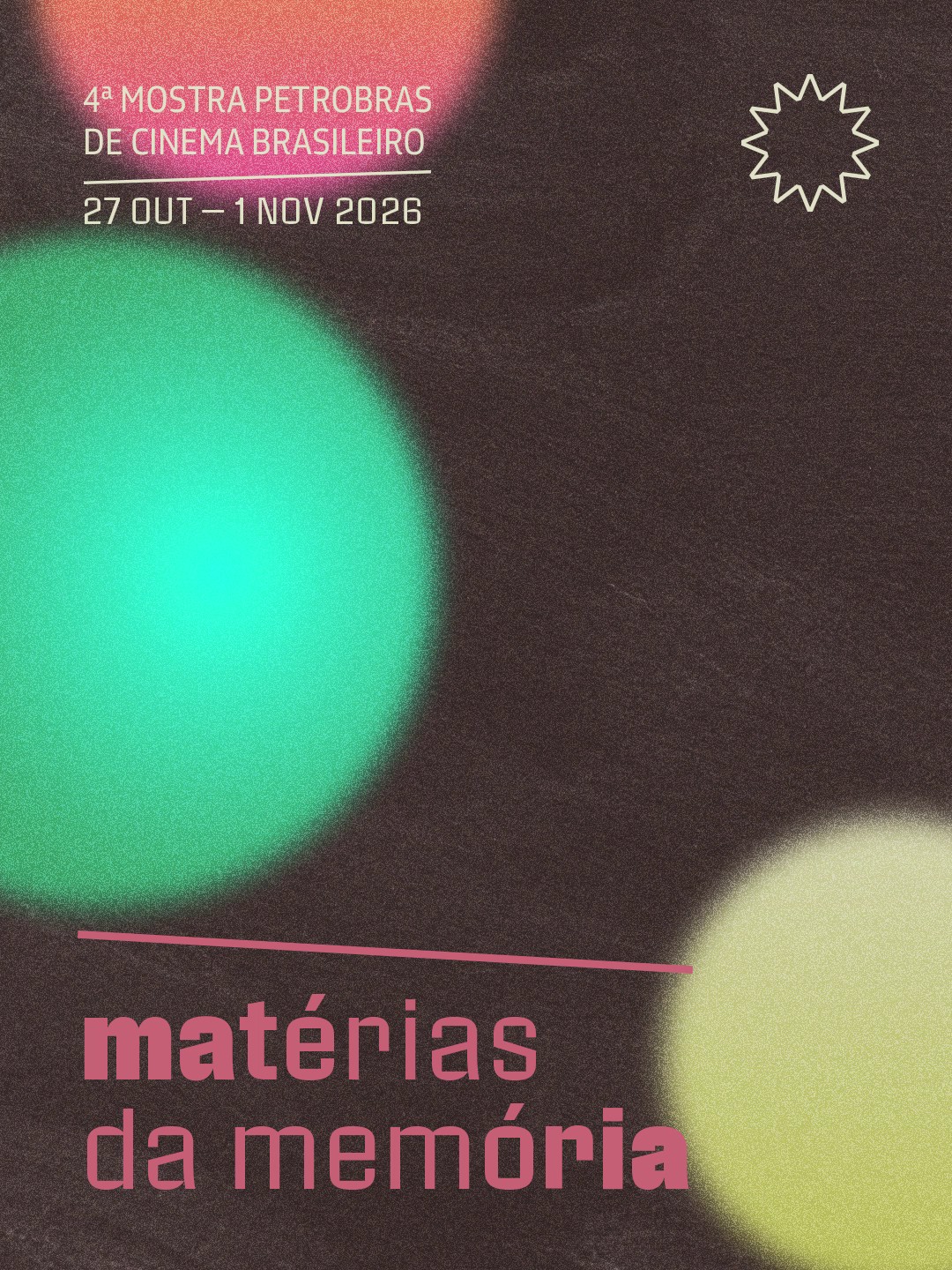
4ª Mostra Petrobras de Cinema Brasileiro – Matérias da Memória
Desde sua primeira edição, a Mostra Petrobras de Cinema Brasileiro busca reafirmar uma concepção ampla do patrimônio cinematográfico e audiovisual olhando para diferentes épocas, territórios, suportes, formatos, durações e sistemas de produção, preservação e circulação das imagens. A mostra se inscreve também nas celebrações do Dia Mundial do Patrimônio Audiovisual.
Neste ano, a mostra volta seu olhar para a matéria das imagens e suas existências no tempo. Películas preservadas, cópias produzidas para exibição contemporânea, filmes digitalizados e obras restauradas compõem uma programação que propõe pensar preservação e difusão como duas faces de um mesmo processo. A construção de uma memória cinematográfica é possível graças à preservação de seus diferentes suportes, mas também por sua atualização nos encontros com novos públicos.
#English
Since its first edition, the Petrobras Brazilian Cinema Showcase has sought to reaffirm a broad understanding of cinematographic and audiovisual heritage, embracing different periods, territories, media, formats and systems of image production, preservation, and circulation. The showcase is also part of the celebrations of World Day for Audiovisual Heritage.
This year, the showcase turns its attention to the materiality of images and their existence over time. Preserved film prints, new prints produced for contemporary screenings, digitized films, and restored works come together in a program that invites us to consider preservation and dissemination as two sides of the same process. The construction of cinematic memory is made possible not only through the preservation of its various physical and digital formats, but also through its continual renewal in encounters with new audiences.
TER 27 OUT . 18h30
Os irmãos Segreto (I fratelli Segreto), de Michele Manzolini e Federico Ferrone. Brasil/Itália, 2025. Documentário. 78’. Em DCP. Classificação indicativa 14 anos. Sessão seguida de debate com o professor Fabián Núñez (UFF) e com a produtora Juliana Carvalho. Com o apoio da Bang Filmes.
QUA 28 OUT . 18h30
O ébrio, de Gilda de Abreu. Brasil, 1946. Com Vicente Celestino, Alice Archambeau, Rodolfo Arena. 124’. Em DCP. Versão Restaurada em 2026. Classificação indicativa 10 anos. Sessão seguida de debate com Juliana Tilmann (Pós-Doutoranda UFF).
QUI 29 OUT . 18h30
O agente secreto, de Kleber Mendonça Filho. Brasil/França/México/Alemanha/Holanda, 2025. Com Wagner Moura, Maria Fernanda Cândido, Tânia Maria e Carlos Francisco. 160’. Em 35mm. Classificação indicativa 16 anos. Sessão com o apoio da Vitrine Filmes.
SEX 30 OUT . 18h
Homenagem aos 90 anos do fotógrafo Dib Lutfi. A lira do delírio, de Walter Lima Jr. Brasil, 1978. Com Anecy Rocha, Paulo César Pereio, Cláudio Marzo. 105’. Em DCP. Classificação indicativa 14 anos. Sessão seguida de conversa com Michel Schettert e Marina Lutfi.
SÁB 31 OUT . 16h
Filmes digitalizados do festival de cinema amador JB Mesbla. Mesa redonda sobre o processo de digitalização e restauro dos filmes da sessão com Luiza Rosado e Aarão Marins.
DOM 1 NOV . 16h30
A idade da Terra, de Glauber Rocha. Brasil, 1980. Com Jece Valadão, Antônio Pitanga, Tarcísio Meira, Geraldo Del Rey, Ana Maria Magalhães, Norma Bengell. 152’. Em 35mm. Classificação indicativa 18 anos.
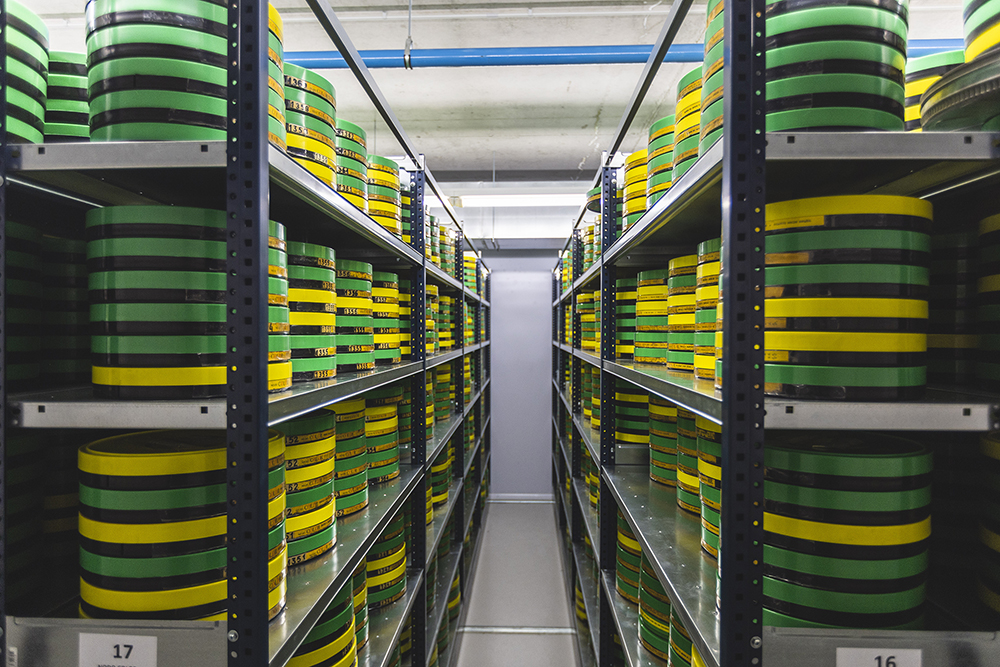
Jornada de puertas abiertas / Centro de Conservación y Restauración de fondos fílmicos de Filmoteca Española
Con motivo de la celebración del Día Mundial del Patrimonio Audiovisual te invitamos a recorrer en una jornada de puertas abiertas el edificio donde se conservan y restauran los fondos fílmicos de Filmoteca Española. Conoceremos de primera mano, junto a su personal técnico, los trabajos que se desarrollan en él y la importancia de la preservación de los materiales fílmicos para el conocimiento y la difusión de este patrimonio cultural tan especial.
Fecha: 27 de octubre, 12h / Aforo limitado dadas las características del edificio y el trabajo que en él se realiza
CATALAN
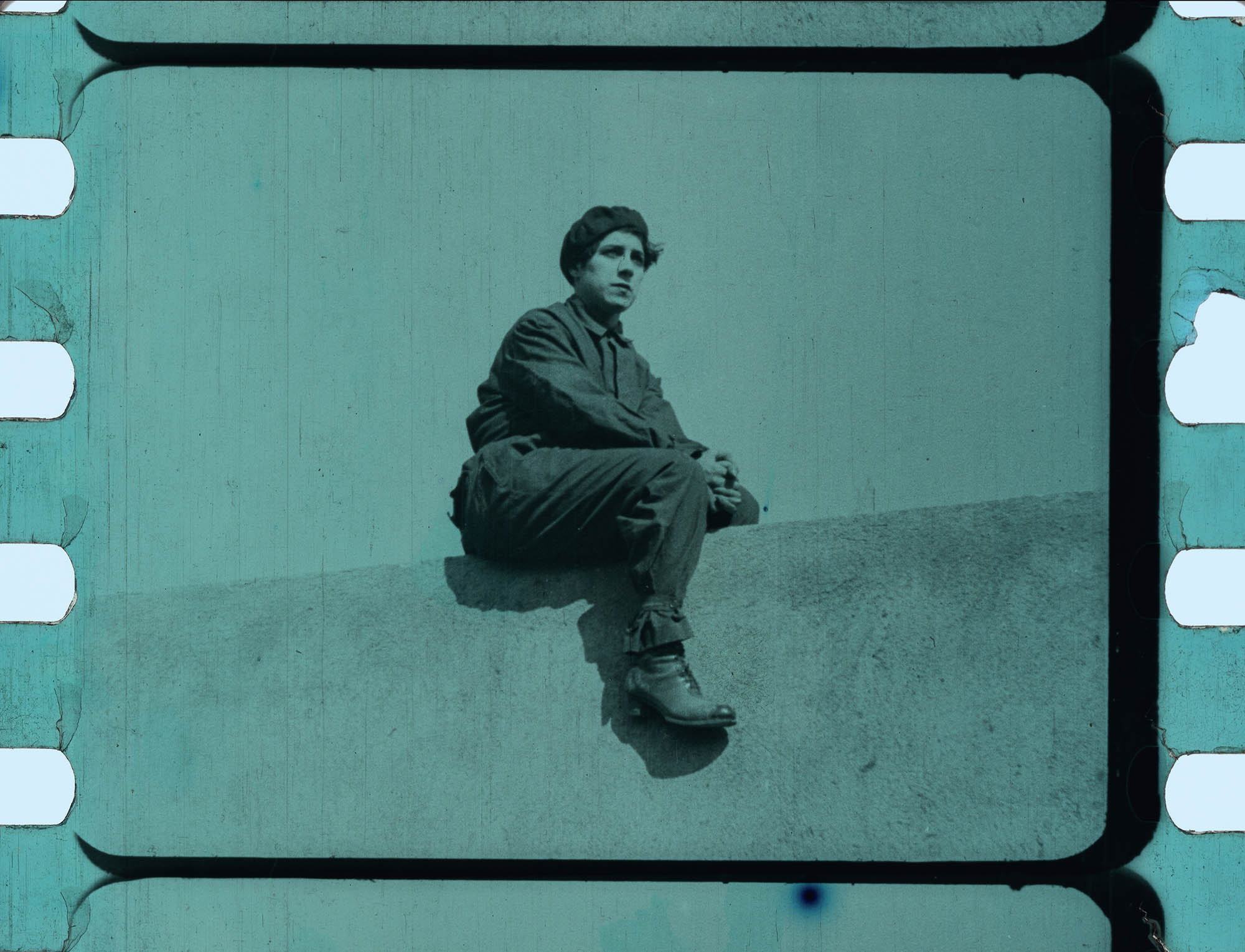
Celebrem el Dia Mundial del Patrimoni Audiovisual amb dues projeccions especials que posen en valor la col·lecció fílmica conservada al Centre de Conservació i Restauració de la Filmoteca de Catalunya: Soplo de esplendor i Voluntad que vence.
En un dia com avui, Soplo de esplendor adquireix un significat especial, reivindicant no només una obra fonamental dels inicis de Benpar, sinó també els valors que donen sentit a la preservació del patrimoni cinematogràfic: la transmissió de la memòria, la curiositat pels films del passat i l’amor al cinema que ha inspirat generacions d’espectadors i creadors.
Amb Voluntad que vence celebrem el cinema amb la projecció d’una restauració d’especial rellevància: la recuperació per a la gran pantalla d’un títol del cinema català que, fins ara, només havia estat documentat a través de la premsa de l’època.
ENGLISH
We wish to celebrate World Day for Audiovisual Heritage with two films preserved at the Filmoteca de Catalunya’s Conservation and Restoration Centre: Soplo de esplendor and Voluntad que vence.
In a celebration such as this, Soplo de esplendor takes on special significance. Carlos Benpar’s film focuses on the values that give meaning to the preservation of film heritage: the transmission of memory, curiosity about films of the past, and a love for the cinema that has inspired generations of viewers and creators.
With Voluntad que vence, we are premiering a Catalan film title that, until now, had only been documented in the press of the time.
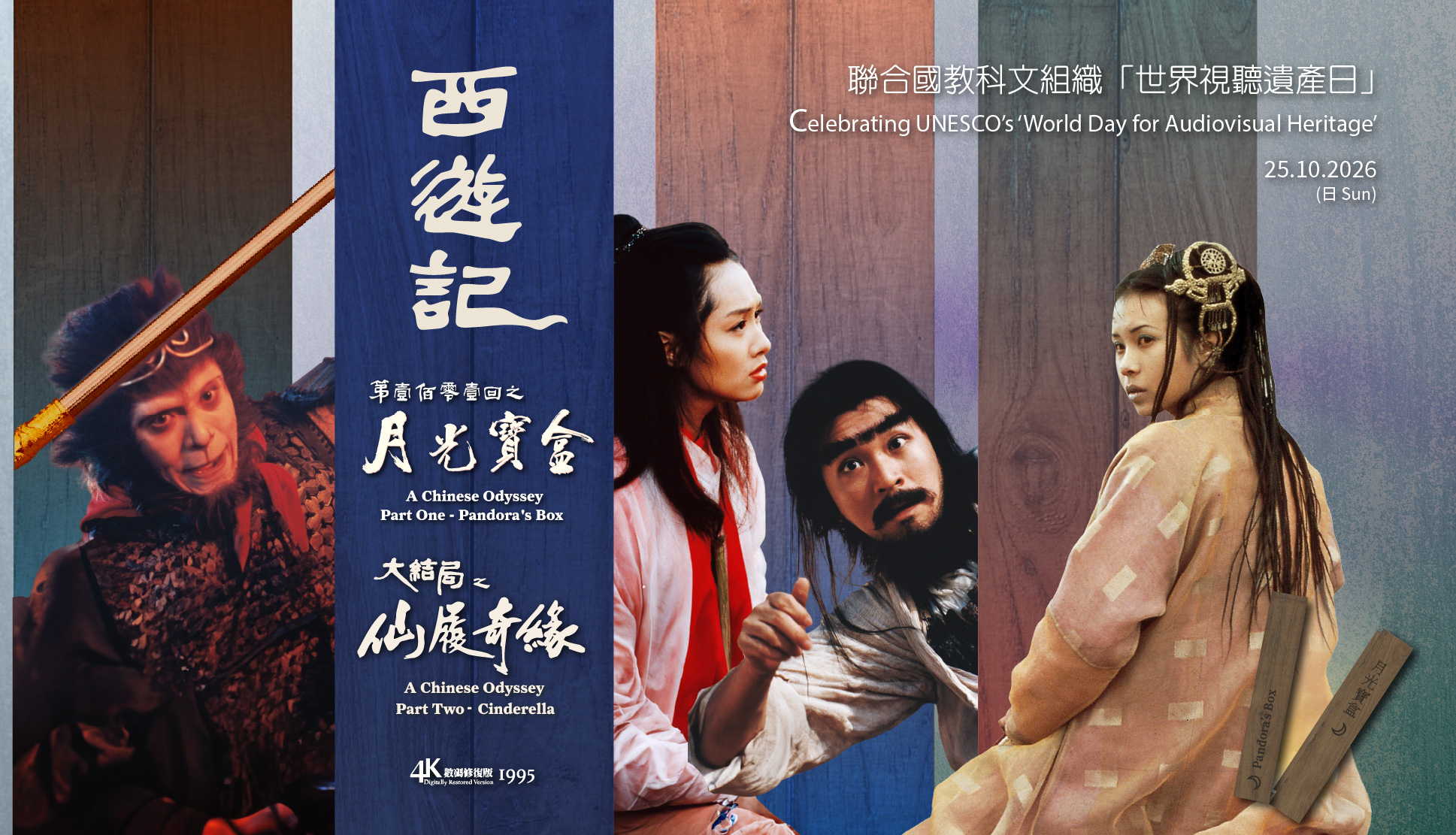
In support of ‘World Day for Audiovisual Heritage’, the Hong Kong Film Archive will present the 4K digitally restored versions of A Chinese Odyssey Part One—Pandora’s Box (1995) and A Chinese Odyssey Part Two—Cinderella (1995). Renowned director Jeff Lau’s rampant imagination not only matches the calibre of Stephen Chow’s masterful performance but also infuses Mo Lei Tau (nonsensical) humour with touching elements of romance, making the two films enduring classics in Hong Kong comedy cinema. The two films have become undisputed classics of Hong Kong comedy, and are featured in the Archive’s ‘100 Must-See Hong Kong Movies’.
In 2025, the 4K digital restoration of the films was made possible through the provision of the films’ original negatives, Cantonese soundtracks, and subtitle negatives by Media Asia Film Distribution (HK) Limited. In addition to removing scratches, flickers, and stains from the images and reducing background noise in the soundtracks, the restoration team also added the original bilingual subtitles back to the films. For colour grading, the team consulted both the Archive’s prints and digital materials from Media Asia, while incorporating professional input from members of the films’ production team to allow these two classics to be screened with the sound and images close to the original theatrical release quality.
A Chinese Odyssey Part One – Pandora's Box (4K Digitally Restored Version)
Dir/Scr: Jeff Lau
Special Effects Dir: Andy Ma
Prod Co: Choi Sing
Cast: Stephen Chow, Law Kar-ying, Ng Mang-tat, Karen Mok, Lam Kit-ying
1995 | Colour | DCP | Cantonese | Chi & Eng Subtitles | 88min
Courtesy of Media Asia Film Distribution (HK) Limited
Date: 25/10/2026 (Sun)
Time: 11:00am
Venue: Cinema, Hong Kong Film Archive
A Chinese Odyssey Part Two – Cinderella (4K Digitally Restored Version)
Dir/Scr: Jeff Lau
Special Effects Dir: Andy Ma
Prod Co: Choi Sing
Cast: Stephen Chow, Ng Mang-tat, Law Kar-ying, Karen Mok, Athena Chu
1995 | Colour | DCP | Cantonese | Chi & Eng Subtitles | 100min
Courtesy of Media Asia Film Distribution (HK) Limited
Date: 25/10/2026 (Sun)
Time: 3:00pm
Venue: Cinema, Hong Kong Film Archive
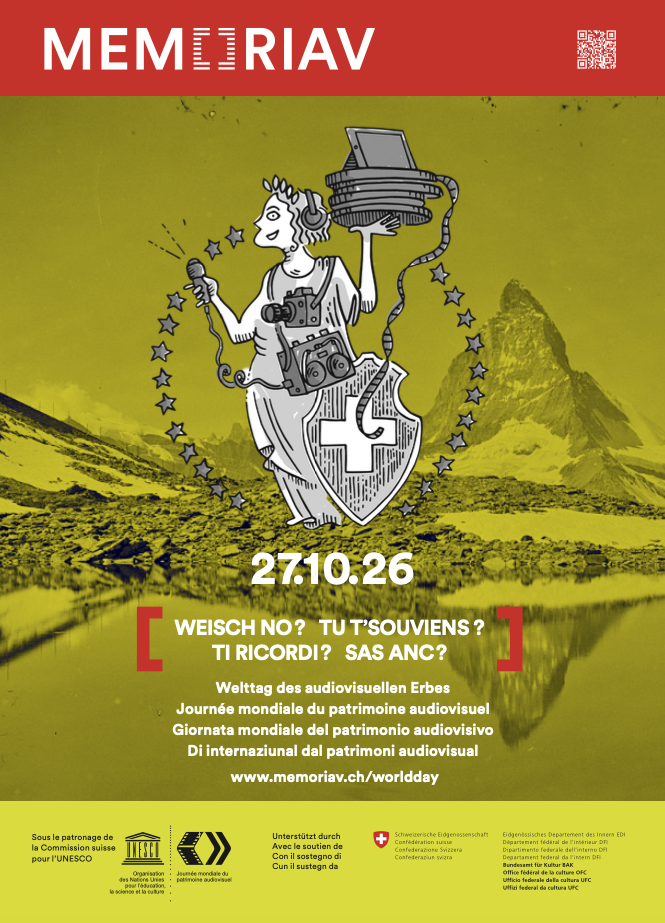
Under the patronage of the Swiss Commission for UNESCO, Memoriav coordinates events and projects related to this day throughout Switzerland.
Discover the programme and immerse yourself in the fascinating world of audiovisual heritage: www.memoriav.ch/worldday
The new AVefi infrastructure can be seen and used as an important window onto our audiovisual heritage. To mark the annual UNESCO World Day for Audiovisual Heritage on 27 October, the AVefi research platform and the collaborative project of the same name behind it will be presented to all interested parties in two short webinars.
Films have been around for more than a hundred years – from *Metropolis* to scientific and educational films, right through to amateur and promotional films. Yet this audiovisual heritage is diverse and scattered across numerous archives, collections and research platforms.
AVefi forges connections: this integrated system brings together filmographic information from various sources and links it via standardised film identifiers (so called efi). This makes it easier to locate films, different versions and manifestations, as well as their locations, and to establish connections between them.
To mark World Day for Audiovisual Heritage 2026, this collaborative infrastructure project – which has been running since autumn 2023 – will be presented in a 30-minute compact webinar. The focus will be on a detailed demonstration of the AVefi platform http://www.av-efi.net: how can films and film data be discovered, filtered, linked and reused?
The Webex webinar, organised by the AVefi team led by Matti Stöhr, Stefan Stretz (TIB – Leibniz Information Centre for Science and Technology) and Jasper Stratil (Stiftung Deutsche Kinemathek (SDK)), is aimed at staff at film archives, film and media scholars, filmmakers, researchers and anyone interested in audiovisual heritage.
Dates and dial-in links:
11.00 am (GMT 2) – WDAVH2026 webinar: AVefi showcase (English): https://s.gwdg.de/3ALaA5
14.00 pm (GMT 2) – WDAVH2026 webinar: AVefi showcase (German): https://s.gwdg.de/f3WGW5
The film explores the Monument to the Uprising of the Peoples of Banija and Kordun, one of the most significant monuments built in the former Yugoslavia. Through encounters with accidental and intentional visitors over several years, the film observes the monument’s gradual decay — a process that becomes a metaphor for the disappearance of a monument and the erosion of a much broader historical and social legacy.
26 October | 20:00
Gojko Kastratovic Hall
Film crew:
Director & Script: Mladen Ivanović
Cinematography: Matija Petrović, Ivan Čizmin, Ivan Tripar, Luka Jazić, Tena Zupčić
Editing: Maja Predrijevac
Producers: Tamara Puizina, Laura Pribanić
Production: ADU Zagreb, VIDEA PRODUCTION
Croatia, Montenegro / 2026
AVA_Net Webinar: 'Three Years Later: Out of Commerce in Practice'
Date: October 27, 2026
Time: 13:00 – 14:30 CEST
Location: Online via Zoom
Cost: Free
Language: Dutch (Please note: This webinar will be presented in Dutch)
About the Webinar
October 2023 marked the official implementation of the Out of Commerce Covenant for audiovisual works. Under specific conditions, this European framework allows heritage institutions to make copyrighted audiovisual material accessible online without seeking explicit permission from rights holders, provided these works are no longer commercially available, or never were.
Now, three years later, it is time to look back and evaluate.
During this interactive Dutch-language webinar, we will reflect on practical experiences from the past three years and offer actionable advice on how to make the most of the framework.
Key topics we will discuss:
What makes this framework attractive for heritage institutions?
What obstacles or challenges do organizations encounter?
How much time, knowledge, and capacity does implementation realistically require?
Is this framework practical and accessible for smaller heritage organizations?
Join the conversation and learn from real-world insights shared by colleagues across the field!
Speakers
Maarten Zeinstra – Copyright Specialist (KVAN)
Dennis Hekker – Legal Counsel (Sound & Vision / Beeld & Geluid)
Daniël Blom – Audiovisual Specialist (Utrecht Archives / Utrechts Archief)
Special screening of the newly digitized version of the iconic Bulgarian classic - The Inspector and the Night (1963) by director Rangel Vulchanov.
A criminal inspector is investigating a case of poisoning. The victim - Marinov, a man with a dark past and a dubious moral, is found dead. Every one of Marinov`s neighbours is hiding their real relations to him. As the investigation goes on, the inspector reveals the victim`s neighbours` secrets.
The cast includes Georgi Kaloyanchev, Nevena Kokanova, Stefan Danailov and Ivan Andonov among others.
The Macedonian Cinematheque is extending its festivities on the occasion of UNESCO’s World Day for Audiovisual Heritage by dedicating the month of October to marking the anniversaries of 21 Macedonian feature films.
With the special screenings of A Quiet Summer (1961), The Assassins from Salonika (1961), Till Victory and Beyond (1966), Thirst (1971), The Macedonian Part of Hell (1971), Black Seed (1971), The Longest Journey (1976), Australia, Australia (1976), The Red Horse (1981), Happy New Year ’49 (1986), Tattoo (1991), Suicide Guide (1996), Revenge (2001), Dust (2001), The Secret Book (2006), The Border Post (2006), This is not an Americal Movie (2011), Punk’s Not Dead (2011), The Liberation of Skopje (2016), Amok (2016) and Golden Five (2016), the Cinematheque celebrates 65, 60, 55, 50, 45, 40, 35, 30, 25, 20, 15 and 10 years of these films’ premieres respectively.
Cinema does not allow time to remain static. Each of the anniversary films bears the imprint of its time, yet with every new viewing, it acquires a new meaning. This is precisely where the power of cinema as a form of collective memory lies: film preserves time, while at the same time allowing each new generation to revisit and question it.
It is with the release and promotion of the Blu-ray edition of director Trajche Popov’s feature film Macedonian Bloody Wedding made in 1967, based on the eponymous play by Vojdan Chernodrinski (1900), that the Macedonian Cinematheque is observing 27 October, UNESCO’s World Day for Audiovisual Heritage. The film was digitized and digitally restored in 2025 as part of the project "A Season of Classic Films" coordinated by the Association of European Cinematheques (ACE) and supported by the EU’s Creative Europe MEDIA programme.
The film is set at the turn of the 20th century when Macedonia was still under Ottoman rule. The plot centers around Cveta, a young Orthodox Christian woman, who refuses to submit to the brutal demands of Osman bey, a powerful regional official of the Ottoman Empire, who takes her to his harem by force and coerces her to convert to Islam. An uprising of the local population ensues prompting an intervention by the diplomatic representatives of Russia, France and England in a bid to bring the situation to an end.
The Macedonian Cinematheque began the process of digital restoration in 2011 as the most modern method of safeguarding Macedonia’s audiovisual heritage. A pivotal year in this regard was 2022, when our in-house system for the digitization and digital restoration of films and film materials was established and put into operation. This was a milestone in our institution’s growth as digital restoration had previously been outsourced to international laboratories. The first films to be digitally restored in-house were four feature films and three documentaries by one of Macedonia’s leading directors, Stole Popov.
In celebration of the UNESCO World Day for Audiovisual Heritage, TIFF Cinematheque in partnership with TIFF’s Film Reference Library is proud to present Ramiro Puerta Restored.
This event celebrates the work of Colombian-born Canadian filmmaker Ramiro Puerta and will include a pre-recorded introduction by Puerta’s longtime editor Ricardo Acosta, followed by a panel discussion about his work and importance to the Latinx diasporic film community after the screening. Please join us after the event for a reception in Varda.
This programme is the result of a SSHRC Partnership Engage Grant–funded project led by Professor Zaira Zarza of Université de Montréal in partnership with TIFF, The Toronto Metropolitan University Film Photography Preservation and Collection Management Program, and the Queen’s University Vulnerable Media Lab. The project, entitled Archiving Latinx Canadian Cinema: The Ramiro Puerta Collection at the TIFF Film Reference Library, aims to research, inspect, and restore the Ramiro Puerta collection to promote access to at-risk film prints from the Ramiro Puerta collection at TIFF.
Born in 1953 in Bogotá, Colombia, Ramiro Puerta was an actor, musician, radio host, and the first programmer of Latin American cinema at TIFF, as well as a filmmaker. Puerta’s four short films are highly self-referential and consistently reference themes of cultural identity, family, music, dance, life, and death. This UNESCO World Audiovisual Heritage Day, we come together to celebrate and preserve one of the most distinctive voices of Canada’s diasporic Latinx film community.
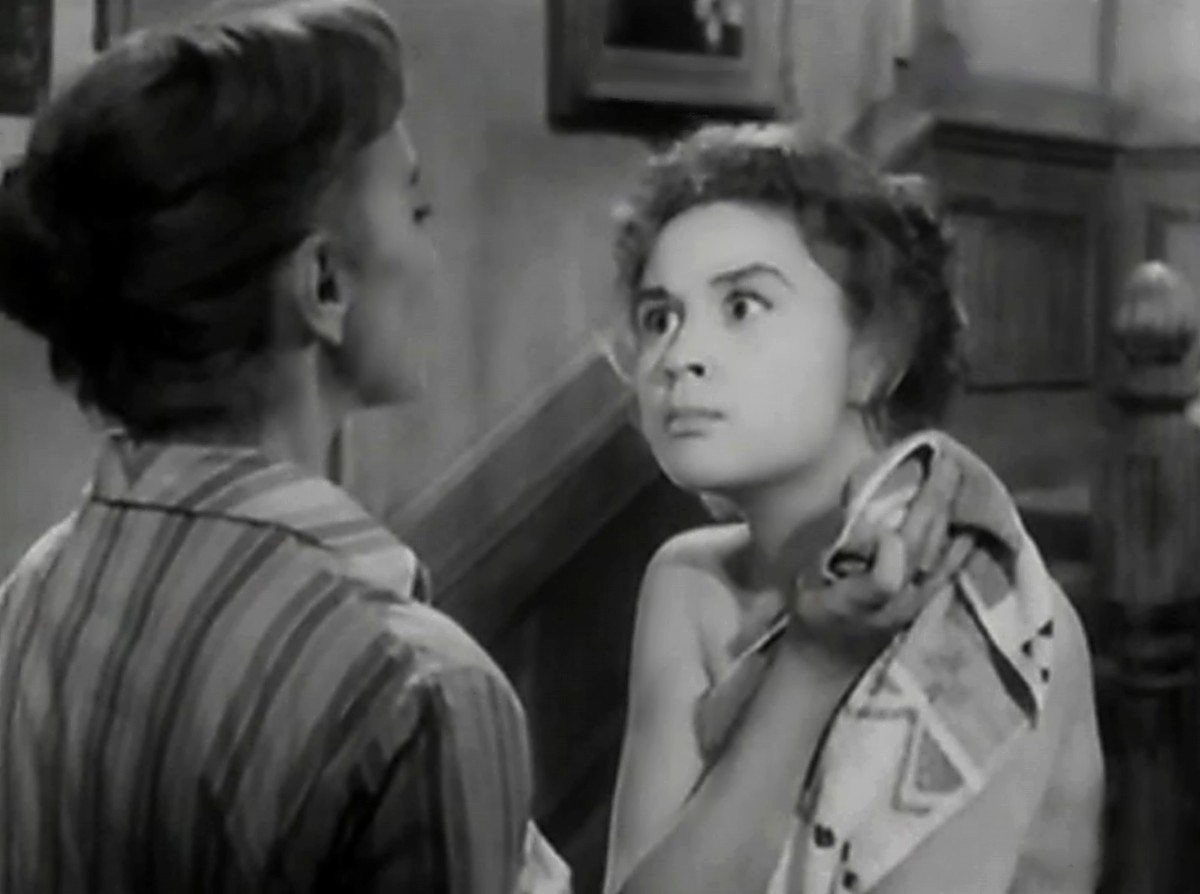
Presentación de 2 films míticos del cine argentino que representan la primera película en colores LO QUE LE PASÓ A REYNOSO (1955) y LAS FURIAS (1960) primer film dirigido por una mujer en el cine sonoro argentino.Ambos films pertenecinetes al acervo de la Fundación Cinemateca Argentina. Se presentan en copias restauradas Lo que le pasó a Reynoso en 35 mm, realizada en 2007 en el Laboratorio Stagnaro(desaparecido) y Las Furias restauración en 4K realizado por Fundación Gótica en 2026. El evento es organizado por el Ministerio de Cultura de la Ciudad de Buenos Aires, El complejo Teatral de Buenos Aires y la Fundación Cinemateca Argentina, con el apoyo de la Cinemateca Nacional INCAA.
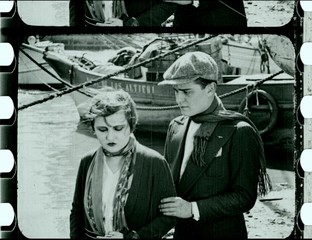
Encuentro de varios archivos con la presentación de dos films fundacionales del cine argentino PERDÓN VIEJITA 1927 y MUCHACHO DE LA CIUDAD ambos de José A. Ferreyra, pionero del cine argentino.Se realizarán mesas con distintos especialista sobre EL DESAFIO DE LA PRESERVACIÓN.Evento presencial y en linea. Organizan INCAA ENERC, Cinemateca Nacional y Fundación Cinemateca Argentina
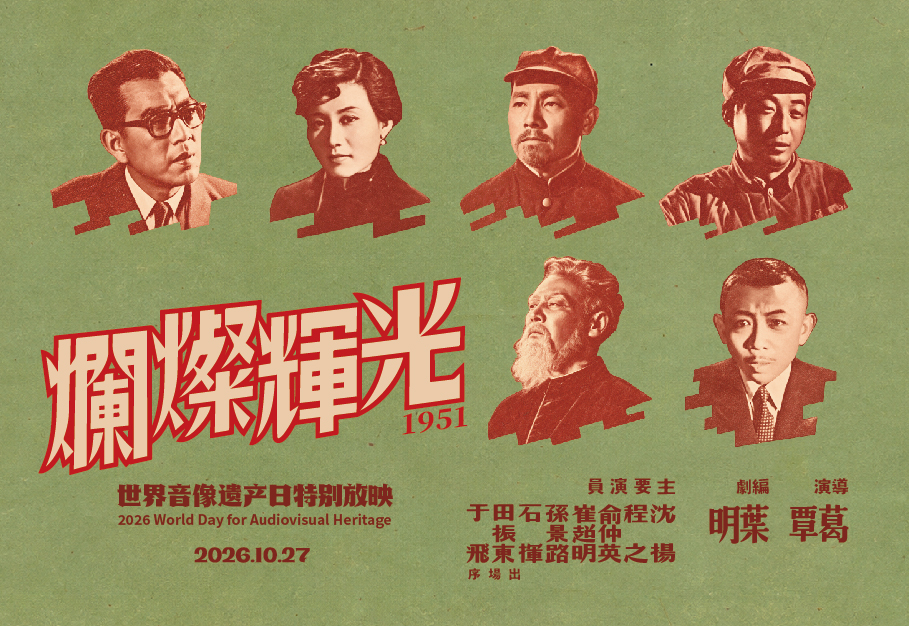
This year’s World Day for Audiovisual Heritage, we will present simultaneous screenings in Beijing and Suzhou of Splendor (1951), a rare title from our collection that has never been publicly screened before. Produced by Wenhua Film Company, the film marked Ye Ming’s first solo directorial effort after making the transition from acting to directing. It is notable for its inventive use of light and shadow, as well as outstanding performances by Cui Chaoming, Shi Hui, Sun Jinglu, and others.
The Beijing screening will be preceded by a brief introduction to the film and its historical context.
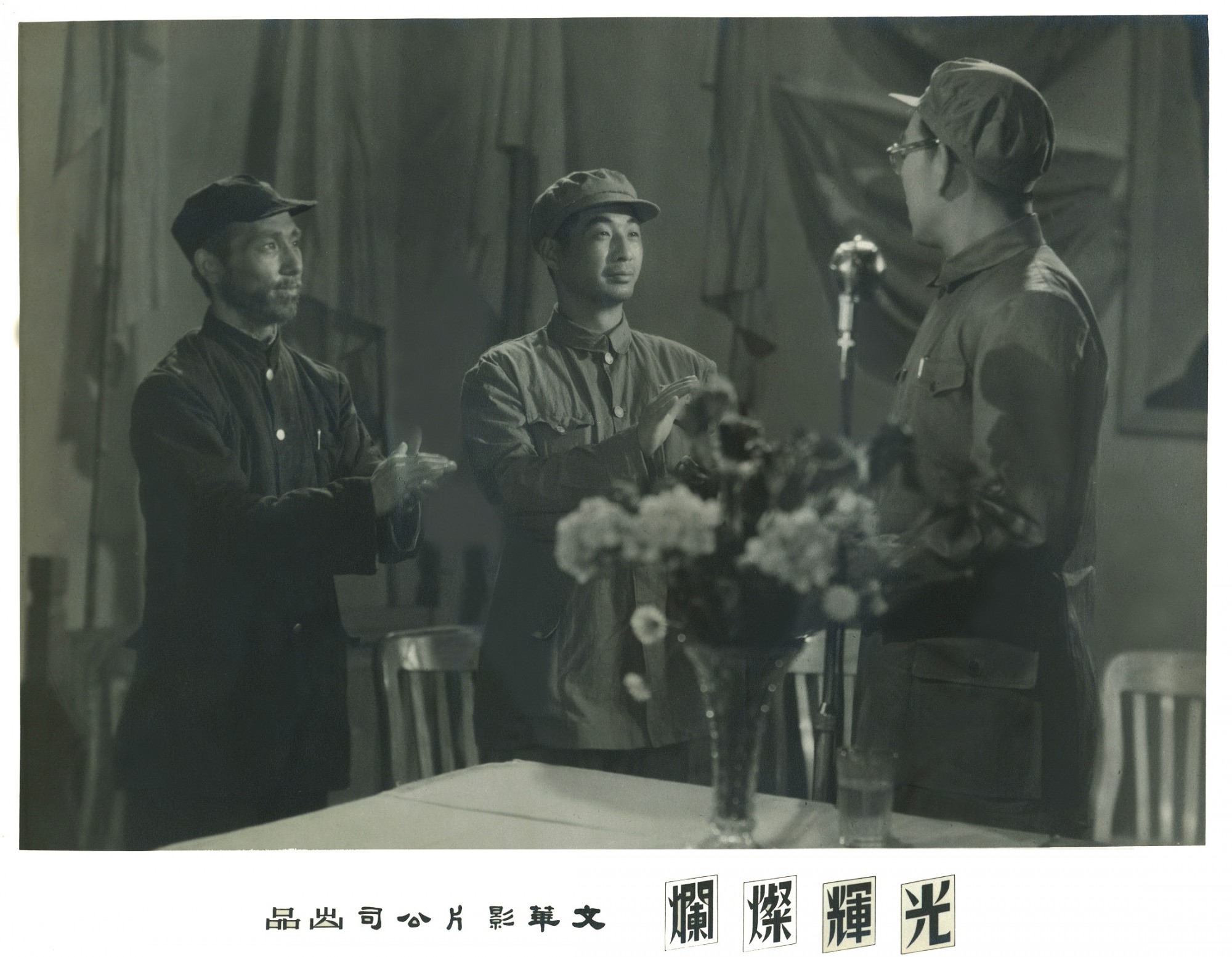
This year’s World Day for Audiovisual Heritage, we will present simultaneous screenings in Beijing and Suzhou of Splendor (1951), a rare title from our collection that has never been publicly screened before. Produced by Wenhua Film Company, the film marked Ye Ming’s first solo directorial effort after making the transition from acting to directing. It is notable for its inventive use of light and shadow, as well as outstanding performances by Cui Chaoming, Shi Hui, Sun Jinglu, and others.
Sinematek/Sinema Evi is holding the premiere of its latest film restoration project Port of The Lonely (Yalnızlar Rıhtımı, 1959) on October 27. As an associate member of the International Federation of Film Archives (FIAF), Sinematek/Sinema Evi celebrates this restoration simultaneously with film archives worldwide, proudly reintroducing the film to the world film heritage.
With a story written by poet Attilâ İlhan and starring Sadri Alışık and Çolpan İlhan, Yalnızlar Rıhtımı occupies a special place in director Lütfi Ö. Akad’s filmography. Inspired by French poetic realism, Lütfi Ö. Akad —who is also one of the pioneering directors in Türkiye— explores a cinematic aesthetic and technique he had never previously attempted. Planned down to every frame, the film leaves a painterly impression on the memory through its dialogue and staging, unmistakably the work of a master director. The filmmaker describes the film as a “milestone” in his career, explaining that it marked his first use of what he called “depth staging”, an approach that would become his hallmark in later years.
With the support of Kurukahveci Mehmet Efendi and the approval of the rights holder, Beşiktaş Cultural Center (BKM), the digital restoration was carried out at Atlas Post Production using the 35 mm positive print preserved in the TRT archive. We also thank Türkiye's other FIAF member, the Cinema & TV Institute, for their unwavering support throughout the restoration process.
ESPAÑOL
Chile al día (1944–1950): muestra de noticieros en nitrato rescatados por la Cineteca Nacional de Chile
Con motivo del Día Mundial del Patrimonio Audiovisual, la Cineteca Nacional de Chile presenta una muestra de "Chile al día", noticiero cinematográfico producido por la Dirección General de Informaciones y Cultura (DIC) y parte del archivo histórico de Chile Films.
La selección reúne noticieros de los años 1944 a 1950. En ellos se registró la vida política, social y cultural del país a mediados del siglo XX: actos oficiales, obras públicas, deportes, espectáculos y escenas cotidianas que hoy constituyen un testimonio visual único de ese período.
Estos materiales, filmados en soporte nitrato, fueron trasladados en 2023 a las bóvedas de la Cineteca Nacional, tras un proceso de gestión con Chile Films iniciado en 2017. Allí se desarrolla actualmente un proyecto de rescate, preservación y puesta en acceso.
La muestra busca dar a conocer públicamente parte de este acervo y poner de relieve la fragilidad del patrimonio fílmico en nitrato y la urgencia de su conservación.
Fecha: martes 27 de octubre de 2026, 19:00 horas.
Lugar: Sala de cine, Cineteca Nacional de Chile (nivel -2, CCLM, Plaza de la Ciudadanía 26), Santiago de Chile
Entrada liberada.
ENGLISH
Chile al día (1944–1950): a selection of nitrate newsreels rescued by the Cineteca Nacional de Chile
To mark the World Day for Audiovisual Heritage, the Cineteca Nacional de Chile presents a screening of "Chile al día", a newsreel produced by the Dirección General de Informaciones y Cultura (DIC), Chile's state information and culture office, and part of the historical archive of Chile Films.
The programme brings together newsreels from 1944 to 1950. They document the political, social and cultural life of the country in the mid-twentieth century, including official ceremonies, public works, sports, entertainment and everyday scenes, and today they offer a unique visual record of the period.
Shot on nitrate film, these materials were transferred to the Cineteca Nacional's vaults in 2023, following a process with Chile Films that began in 2017. An ongoing project is now dedicated to their rescue, preservation and access.
The screening aims to bring part of this collection to the public and to highlight the fragility of nitrate film heritage and the urgency of its preservation.
Date: Tuesday, 27 October 2026, 19:00.
Venue: Sala de cine, Cineteca Nacional de Chile (level -2, CCLM, Plaza de la Ciudadanía 26), Santiago, Chile
Free admission.
October 27 marks World Day for Audiovisual Heritage, a major celebration for film archives and cinematheques. As it does every year, the Filmoteca Valenciana is joining the festivities, though this time it is extending the special programme to three days. Three days dedicated to highlighting the vital work of film archives—guardians of memory through the preservation of moving images captured from 1895 to the present day.
Valencian film heritage, safeguarded by our film archive, takes center stage in two of the sessions. On October 27, we celebrate the centenary of Moros y cristianos by Maximiliano Thous, a seminal work in the history of Valencian cinema. We are also revisiting Sangre y arena—the only film directed by writer Blasco Ibáñez—which will be screened following the presentation of the Filmoteca Valenciana’s latest publication: Le Romancier. El guión perdido de Blasco Ibáñez by Carlos Aimeur.
However, the event goes beyond the local scope. It also seeks to connect the concept of heritage with the present and to champion the historical, social, and political importance of preserving the audiovisual memory of peoples—especially those devastated by forces erasing them from maps and history. In this context, on Thursday the 29th, we are premiering in Valencia the Palestinian film A Fidai Film; the film has garnered acclaim at various festivals. Kamal Aljafari uses the 1982 looting of Palestinian films by Israel as a starting point to bring to light materials hidden in Israeli archives and to propose a counter-narrative regarding a continuous history of appropriation. A Fidai Film establishes an intriguing dialogue with Los ojos de Ariana, which will be screened on the same day. That screening will be followed by a discussion—organized in collaboration with the Academia Valenciana del Audiovisual—featuring the director, Ricardo Macián, and Mirwais Rekab, one of the protagonists of the documentary. The program is rounded out by another premiere: the film essay Herbaria, directed by Argentine filmmaker and fellow archivist Leandro Listorti. Listorti works at the Pablo Ducrós Hicken Film Museum in Buenos Aires, where he heads the technical coordination department for preservation and restoration. In this beautiful film—which manages to be both lyrical and educational—Listorti draws parallels between the work of film preservation and botany.
In celebration of UNESCO's World Day for Audiovisual Heritage, join IU Libraries Moving Image Archive (IULMIA) for this October's You (probably) Haven't Seen This Before curated by Andrea M. Sterling!
American Parasites, curated by Andrea M. Sterling
Thursday, October 29 @ 5:30pm
IULMIA Screening Room, Wells Library 048, 1320 E. 10th Street
Free and open to the public. [register here]
This program invites the viewer to consider the practice of parasitism, a primary mechanism influencing structural antagonisms that have undergirded race relations in America from the past through the present. The two short films encourage the audience to question their current understandings of race relations, the exploitation of Black labor, and the ways that labor has acted as an invisible foundation in the practice of White cultural production.
About the curator: Andrea M. Sterling is a Bloomington transplant by way of Providence, Rhode Island, who came here for graduate school and put down roots. Facilitation runs through her work, whether in a classroom, a poetry night, or contracted workshops across the country as a DEI/Transformative Justice consultant. She has co-organized the Bloomington Poetry Slam for the last nine years, facilitates writing circles with Women Writing for a Change, and mixes drinks at the Uptown Café. As a graduate student in African-American and African Diaspora Studies, her focus centered on constructions of race relations in America and the power of a radical love ethic in building liberated futures, themes she continues to carry into her creative and facilitation work today.
Between 1910 and 1915, New York's Kalem Company made close to thirty feature films in Ireland, including the very first one, The Lad From Old Ireland (1910). Until recently, only eight of these films were thought to have survived, but a house clearance in Armagh turned up a single reel from a ninth film: The Shaughraun (1912). Based on Dion Boucicault's play of the same name, The Shaughraun concerns a man falsely framed as a Fenian dissident and transported from Ireland to Australia for punishment. The single nitrate reel was scanned by R3store studios in London and restored by the IFI Archive. It appears for the first time in a century on the IFI Archive Player, to mark World Audio Visual Heritage Day 2026.